Sourdough Guide to Flour: Types, Storage, & Tips
If you’ve ever swapped flours and ended up with flat, dense sourdough bread—or wondered why your dough feels different from recipe photos—you’re not alone.
Flour is the foundation of every sourdough recipe, and small changes in type, brand, or even region can make a big difference.
In this guide, we’ll break down the best flours for sourdough bread, how protein content affects gluten structure, and how to choose the right flour for your baking goals. As well as discuss topics like freezing flour and storing flour.

What is flour?
Wheat flour is made from wheat kernels that are milled or processed into flour.
A kernel of wheat has three parts:
- Bran: Thick outer coating that keeps the inside of the kernel protected from light, heat, and decay. Bran has a high fiber content. It has many health benefits, but makes baking more tricky as it absorbs a lot of water and requires more water added to the dough and it can disrupt gluten development which is why whole wheat loaves are not as airy and puffy as those made with white flour primarily
- Endosperm: White, starchy interior. This contains most of the carbohydrates and starches of the wheat kernel that are broken down into sugars during fermentation. White flour is made when this part of the kernel is extracted by roller milling.
- Germ: Contains rich, nutrient dense oils and the life needed to sprout into a new stalk of wheat if planted. The oils in the germ are very delicate and easily oxidized by light and heat which is why commercial mills try to extract this during the milling process. Home milling is the best way to ensure that you get the nutrition from this part of the wheat kernel.

Best Flour for Sourdough Bread
The best flour for sourdough bread has a balance of high protein content and reliable fermentation performance.
Your choice of flour impacts dough hydration, gluten development, and ultimately the taste, texture, and rise of your bread.
My preference is a blend of bread flour and a high quality whole wheat flour, preferably fresh milled.
Best Flour for Sourdough Starter
When it comes to the best flour for your sourdough starter, there are two answers depending on the purpose.
If you are making a starter from scratch, I recommend creating a rye starter for the fastest most healthy process. Rye flour has high enzyme activity to encourage fermentation.
Once a starter is established, I recommend all-purpose flour or other strong white flour. White flour creates consistent fermentation, known as homogeneous fermentation, that is predictable and easy to work with.
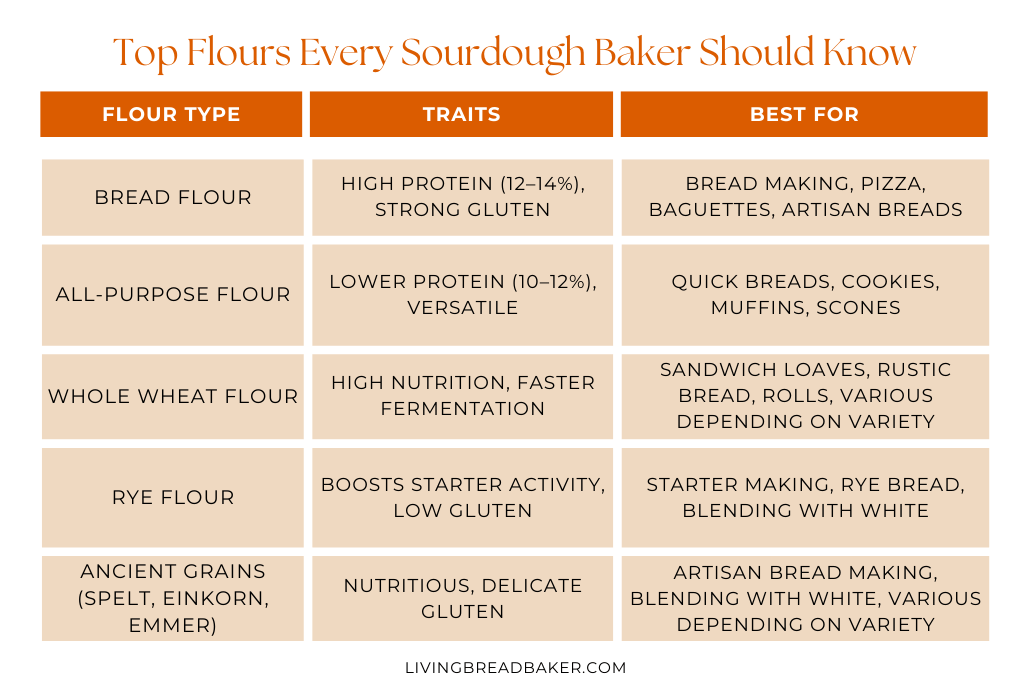
Top Flours Every Sourdough Baker Should Know
- Bread Flour – High protein (12–14%), excellent gluten structure
- All-Purpose Flour – Lower protein (10–12%), varies by brand
- Whole Wheat Flour – High nutrition, faster fermentation (gluten protein varies)
- Rye Flour – Ferments easily, boosts starter activity
- Ancient Grains (Spelt, Einkorn, Emmer) – Nutritious, lower gluten
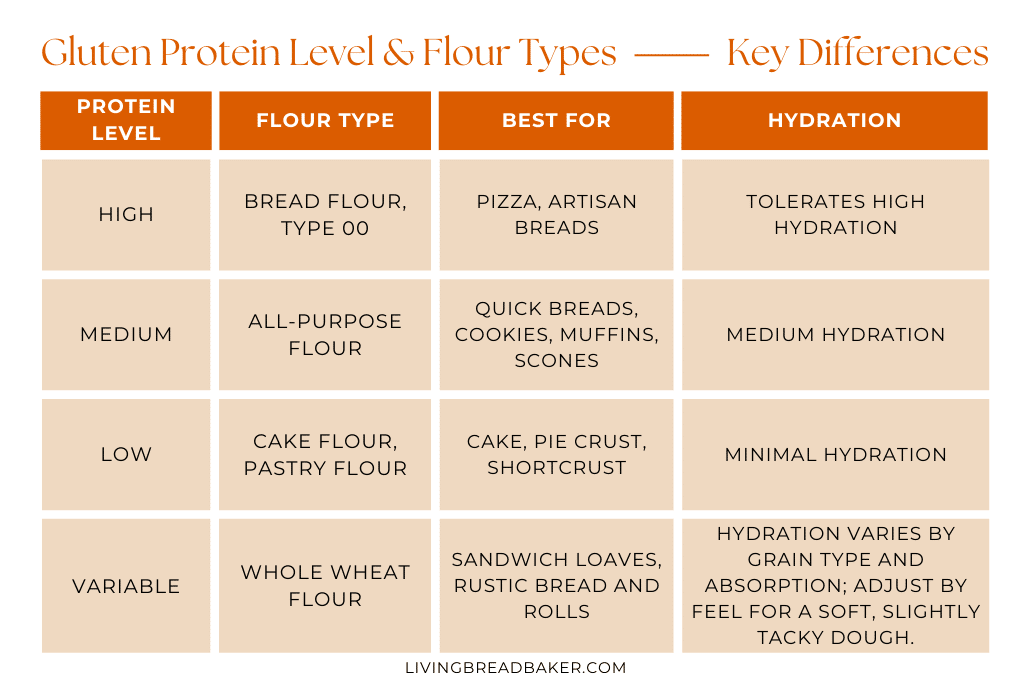
Why Protein Content Matters
The protein in flour is the gluten that forms strong, elastic dough–the higher the protein, the more elastic and stretchy the dough will be.
Strong gluten supports a well-risen loaf with a chewy crumb. Aim for flours with 12% or more protein for bread making.
Flour Protein Level Comparison:
| Flour Type | Protein (%) |
| Bread Flour | 12–14% |
| All-Purpose | 10–12% |
| Whole Wheat Flour | 13–15% |
| Rye Flour | 8–12% |
| Spelt | 11–13% |
Brands like King Arthur or Central Milling offer consistent high-protein options ideal for sourdough.
Quick Reference to Different Types of Flour and How They Perform
- Bread Flour (Strong Flour)
- Best for beginners and experienced bakers alike. Ideal for open crumb and high hydration bakes. Learn more
- All-Purpose Flour
- Affordable and versatile. Works best when combined with higher-protein flours. Learn more
- Whole Wheat Flour
- Adds earthy flavor and nutrition. Absorbs more water and ferments quickly. Learn more
- Rye Flour
- Low gluten, but great for starters and flavor complexity. Learn more
- Spelt and Ancient Grains
- Delicate structure, high in nutrients. Blend with stronger flour for structure. Learn more
- Semolina / Durum Wheat
- High protein, low elasticity. Best used as a blend.
Your Complete Guide to Flour and Important Tips
Flour makes up the greatest portion of your baking recipe formulas, so storing, using, and choosing it well is important as a baker.
The type of flour can make or break a bread by the way it ferments, bakes, and the final flavor.
Flour Labels to Understand
- Unbleached – Preserves natural enzymes
- Organic – May enhance microbial activity
- Stone-ground – Ferments quickly due to higher bran/germ content
- Hard flour vs. soft flour – Hard or soft refers to the kind of wheat berries used. Hard wheat creates high protein flour. Soft wheat creates low protein flour.
Organic Flour vs. Non-Organic: What Every Sourdough Baker Should Know
This may surprise you, but I use non-organic flours regularly.
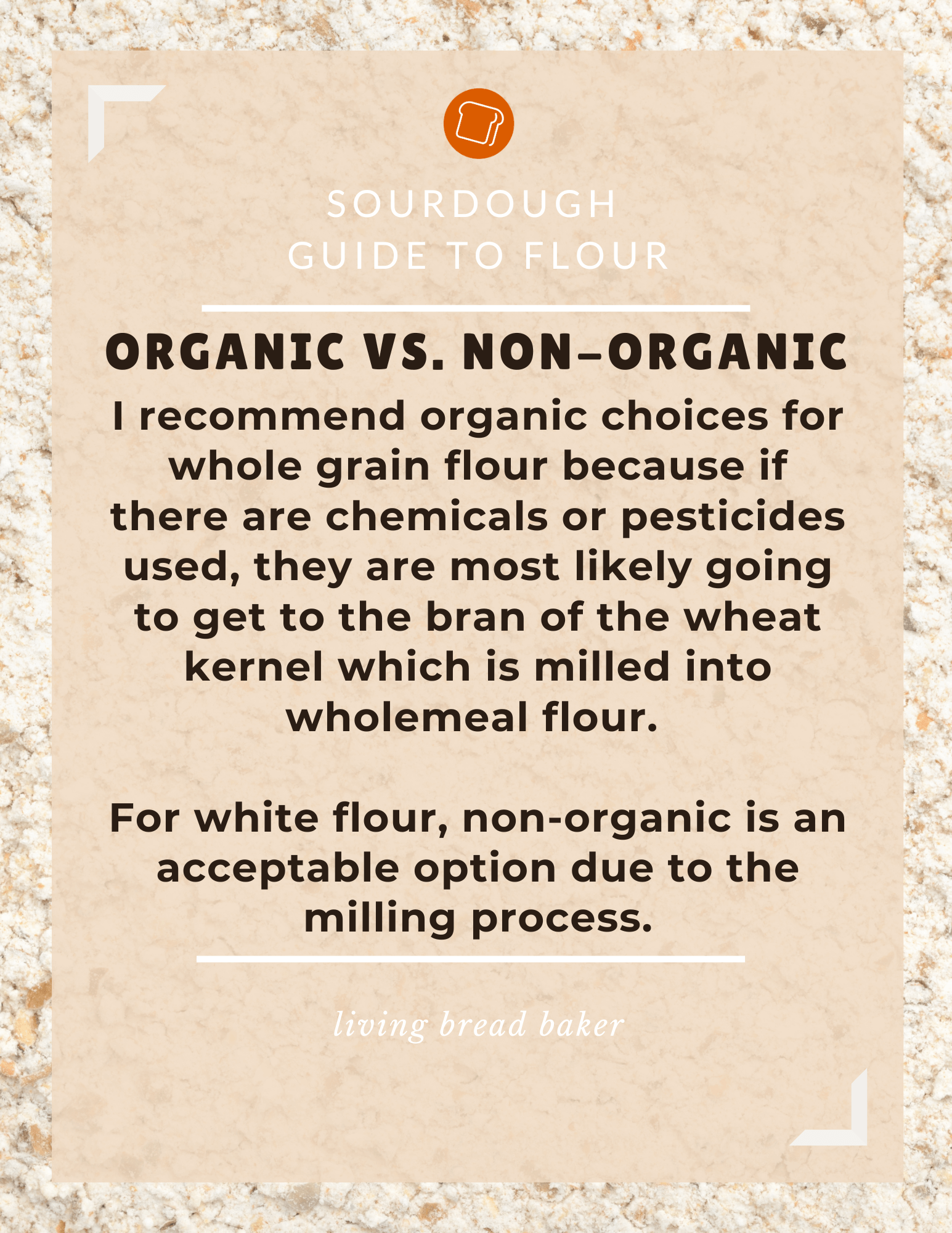
The concern with flour is that if there are chemicals or pesticides used, they are most likely going to get to the bran of the wheat kernel which is milled into wholemeal flour.
In the standard milling process at large flour plants, roller milling is used where the kernels of wheat are rolled with a press and a fan blows the white starchy endosperm (fluffy white flour) into a separate compartment.
Therefore, for white flour, I contend that non-organic is an acceptable option.
In general, I recommend organic choices for whole grain flour because if there are chemicals or pesticides used, they are most likely going to get to the bran of the wheat kernel which is milled into wholemeal flour.
However, organic has become a misunderstood label in recent years and many people make assumptions about foods and items because of the lack of a green sticker. Farms have to meet certain specifications and pay a high price tag for an official organic label. Smaller farms might have high standards, even higher than some official organic farms so it’s helpful to ask questions and look at the farm’s practices when evaluating a purchase. My favorite grain farm that I use for pretty much all of my whole wheat is not certified organic but I know their practices and have great results in my bread.
See organic flour options below in shopping guide
Regional and Brand Differences
- UK Plain Flour = US All-Purpose Flour
- UK Strong White Flour = US Bread Flour
- Red wheat (common in US) differs from white wheat (often in UK/AU)
- Small mills vs. commercial flours vary in absorption
Always adjust water and fermentation time when switching brands or types.
Note: European and UK flours may list ash content instead of protein.
Storing Flour
Flour you buy at the grocery store has usually been made to maximize shelf life. However, make sure to check the dates to ensure that it hasn’t been sitting on a store shelf too long. Old flour can become stale tasting or rancid if it is a variety that contains some whole wheat.
White flour can be stored at room temperature. Choose a cool location as well as a dark, airtight container*. If you don’t use your white flour often, you can consider storing it in a resealable container in the fridge.
Whole wheat flour, especially freshly milled which is my preference, should be stored in the fridge or the freezer. When I mill my wheat I use this rule of thumb:
- Room temperature: Good for 1-3 days (my fresh flour loses nutrition value the more light and heat it is exposed to)
- Fridge: Good for 1-2 weeks
- Freezer: Good for 2-3 months
Store bought whole wheat is made with a process to remove the germ which contains the oils that can go rancid easily making it more shelf stable, but if you don’t plan to use it quickly, storing it in the fridge will improve its shelf life even more.
*If you are creating an emergency stash of flour or wheat berries, you’ll want to use a vacuum sealable mylar bag and oxygen absorbers. Once bag is sealed and air is removed, store in food grade buckets.
Measuring Flour
If you are serious about baking, please invest in a food scale. Mine cost about $11. This tool will help you precisely measure your flour which results in the best final results.
Scooping flour with measuring cups creates a wide range of variability due to how the flour has settled, how it was scooped, etc.
Milling Flour
If you are interested in the highest nutritional value and higher mineral content, milling your flour at home is a great option.
I recommend stone milling because it doesn’t heat up the flour as much as other grinders or metal blades that use speed to cut through the hard wheat berries. Stone milling also creates a better quality flour.
However, stone mills can be a big investment so another excellent option is getting flour from a mill that uses stone milling.
You can explore more about milling and some great flour mills on these pages:
Hydration and Absorption: Adjusting for Different Flours
Understanding how your flour absorbs water is a key step in developing baker’s intuition—and getting consistently good sourdough. High-protein flours like strong bread flour like King Arthur bread flour absorb more water, which allows for higher hydration doughs and open crumb structure. In contrast, low-protein flours (like some all-purpose or wholemeal flours) require less water and can lead to dense bread if overhydrated.
Even between different brands or types of the same flour—like two all-purpose flours—you may notice changes in how wet or dry the dough feels. This is totally normal.
Here’s where intuition meets technique: use your senses to feel the dough and adjust slowly. Add water or flour a little at a time, noting changes in your baking journal so you can repeat what works. Weighing your ingredients and tracking the hydration percentage gives you a consistent starting point—but your hands and eyes will tell you when a dough needs more or less.
📝 Pro tip: Hydration level = (water weight ÷ flour weight) × 100. Start around 70–75% for most sourdough bread recipes and adjust based on the flour’s protein content and your dough’s behavior.
Choosing Flour
Since flour is a primary ingredient, invest in quality. You’ll get what you pay for.
Unprocessed wheat actually has a lot of rare minerals and nutrients, as well as good amount of fiber. However, most of the flour that is readily available is stripped of these elements.
For the best whole wheat, look for organic and stone milled/ground varieties, especially sourced from local farms or mills. The stone milling doesn’t heat up the whole wheat flour as much as other methods which degrades the nutrition of the flour.
Organic whole wheat is important because some growers spray pesticides or other chemicals on their wheat, especially at harvest, which is absorbed by the outer coating of the wheat kernel–the bran.
When I purchase white flour, I look for unbleached and unenriched. I don’t like to have vitamins and minerals added to my flour that are difficult for my body to absorb. I generally buy organic, but white flour is one where you can buy conventional since the bran which may have absorbed some chemicals has been removed.
Below are some common types of flour and how they are used in baking, if you want to skip to my recommended flours shopping guide, click here.
White Flour Types
All-Purpose Flour
This is the type of flour most households are familiar with. All-purpose flour has a moderately high gluten protein percentage (around 8-11%). It is can be used for muffins, cookies, biscuits, thickening a sauce, cakes, pancakes, etc. It can be used to make many varieties of bread and pizza when bread flour is not available, but will not perform as well as bread flour.
Bread Flour
When making bread or pizza, bread flour is the way to go. Bread flour has a higher gluten protein percentage (12-14%) which results in a dough that is stronger and has a better texture. Due to the higher gluten protein amount, this flour works well for dough recipes that are especially wet like focaccia or panettone. The higher gluten protein percentage also means that your dough needs to be sufficiently kneaded or folded to work the dough to the best texture.
00 Flour
This flour is a premium variety with a higher gluten content.
It is extracted to the highest level to take out any bran to create the purest, strongest white flour.
00 flour creates a very stretchy dough and chewy crumb. It is ideal for pizza (especially when using a wood fired pizza oven), baguettes, ciabatta, and other rustic breads.
Pastry Flour
If you want a tender, delicate texture in your baked good, pastry flour is perfect. Pastry flour has less gluten with a protein percentage of 7-8%, which makes it perfect for attaining a flaky, tender texture in scones, biscuits, pies, and other pastries.
Wholegrain Flour Types
Whole wheat flour
Whole-wheat flours introduce a new level of flavor, texture, and nutrition. Whole-wheat has two subcategories: hard and soft. Hard wheat has a higher protein content than soft wheat and is generally better for yeasted breads that require a higher gluten-protein percentage, which creates more strength in the dough. Soft wheat is lower in protein, and is excellent for pies, scones, cookies, and flatbreads. Here are some examples:
- Hard wheat flour: Hard Red Winter, Hard Red Spring, Hard White, Durum (mainly used for pasta and specialty breads)
- Hard wheat varieties of flour are perfect for sourdough bread, pizza, and pasta for the potential for creating strong stretchy gluten.
- Soft wheat flour: Soft White, Soft Red Winter
- Any flour with soft wheat is going to be lower in protein. Soft white wheat flour typically has a great flavor and creates a soft, flaky cookie, cake, or pie crust
For better quality whole wheat flour, check out some of our favorite farms and mills for healthier and sustainable options.
Rye flour
Rye flour has a very distinct flavor and unique chemical structure that makes it ferment more rapidly than other wheat varieties. If you are already baking sourdough, rye flour is best in long fermentation baking since it speeds up fermentation on its own, the time needed for sourdough allows more flavor and complexity to come out than a recipe with quick yeast.
Due to the chemical structure that has higher enzyme activity, it is my preferred way to start a sourdough starter from scratch, you can find my step by step 7-10 process here.
Whole grain rye flour absorbs a high amount of water so when using it for a starter or sourdough bread recipe, you might have to adjust the hydration.
Ancient Varieties
Ancient varieties of wheat are growing in popularity for making bread because of the unique flavors, fermentation potential, and gut benefits.
Common types of ancient grains include einkorn, emmer, and spelt. Spelt flour and einkorn flour are popular because they have less complex gluten protein so they are easier to Sonora is a household favorite and this soft wheat is native to the southwestern United States.
See the Grain to Bread page to find out about some farms growing ancient grain varieties.
Flour Shopping Guide
Here are some flour varieties that I use and recommend. Some links are affiliate links, I may earn a small commission if you purchase but that does not impact your price. See the full policy here.
If you’re an amazon shopper, you can check out my flour recommendations on amazon list.
- All-Purpose Flour
- King Arthur All-Purpose Flour
- King Arthur Organic All-Purpose Flour
- Central Milling Organic All-Purpose Flour
- Cairnspring All Purpose Flour (made with my favorite farm’s wheat!)
- Ethos Mill All Purpose Flour made with Moon Family Farm wheat
- Bread Flour
- King Arthur Bread Flour
- King Arthur Organic Bread Flour
- Central Milling Organic Bread Flour
- Ethos Mill Bread Flour made with Moon Family Farm wheat
- 00 Flour (Pizza)
- Whole Wheat Flours
Free Sourdough Beginner Guide
A competent guide transforms sourdough baking from overwhelming to uncomplicated and fun!
Get My Free Quick Start Sourdough Guide: Learn the key terms and concepts in sourdough baking, including the differences between active sourdough starter and sourdough discard, and how to care for your starter.

If you’re ready to jump in and start baking sourdough confidently—Take the Intro to Sourdough Course for Just $27!
Whole Wheat Sourdough Recipes
- Honey Oat Whole Wheat Sourdough Sandwich Bread
- Whole Wheat Sourdough Hokkaido Milk Bread, Japanese inspired
- Sourdough Whole Wheat with Honey Millet Mix and Seeds
- Sourdough Whole Wheat Challah Bread

Living Bread Baker posts mentioned
When is sourdough bulk fermentation finished?
When is sourdough finished proofing?
Beginners’ Guide to Sourdough Bread Baking Tools on a Budget
Whole Wheat Sourdough Hokkaido Milk Bread, Japanese inspired
Sourdough Whole Wheat with Honey Millet Mix and Seeds
Sourdough Whole Wheat Challah Bread
Shop this post
Organic King Arthur All-Purpose Flour
Organic King Arthur Bread Flour
Organic King Arthur Whole Wheat Flour
(More flour options in shopping guide above)
FREE Sourdough Quick Start Guide
Sourdough Time Planning Workbook & Baking Journal
My Intro. to Sourdough online course
Sourdough Time Planning Workbook & Baking Journal
This post contains affiliate links. Read my policy here.