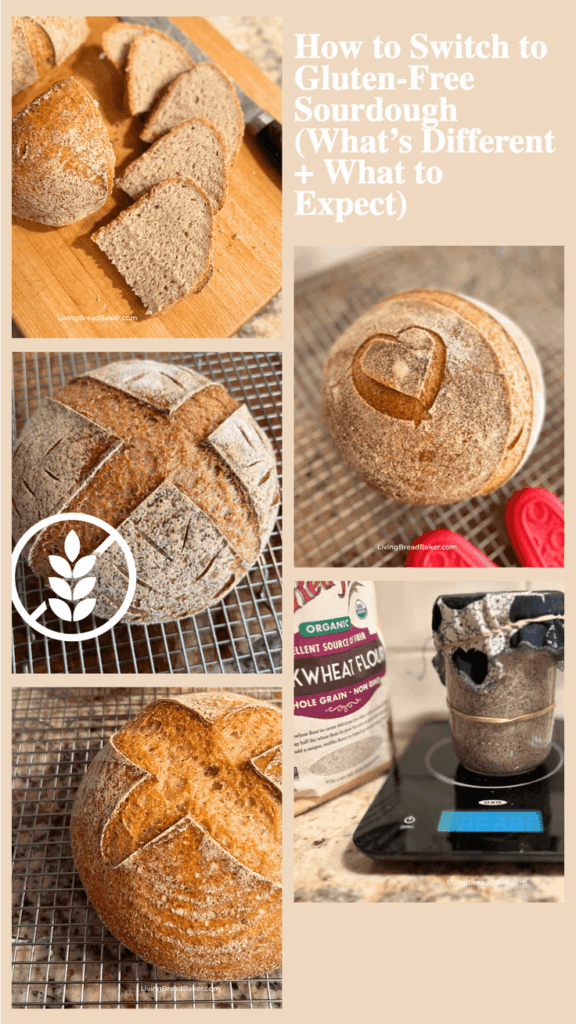
How to Switch to Gluten-Free Sourdough (What’s Different + What to Expect)
Wanting to switch to gluten-free sourdough, but overwhelmed with where to start?
Some people switch to gluten-free because sourdough alone isn’t enough to help with digestive issues after eating wheat bread. Others may be navigating a celiac diagnosis, gluten sensitivity, or other health concerns for themselves or someone in their family.
There is so much information online, but not all of it is helpful. (I failed in two previous attempts because of poor online advice.)
While many sourdough skills transfer well, gluten-free sourdough is very different in flavor, texture, fermentation, and dough handling. It really can’t be compared directly to traditional sourdough — it’s its own unique and beautiful thing!
We switched to gluten-free sourdough for health reasons and have learned a lot along the way.
In this guide, you’ll learn:
- helpful resources and beginner FAQs
- the key differences between gluten-free and regular sourdough
- the best gluten-free flours for starters and baking
- how to make a gluten-free sourdough starter
- common gluten-free sourdough mistakes and troubleshooting tips
What is Gluten-Free, and Why Does it Matter?
Gluten is the protein in all varieties of wheat flour (e.g., white flour, whole wheat flour, rye flour, semolina, etc.) that makes dough stretchy and makes the big bubbles and chewy texture in baked bread that many people love!
The label gluten-free means that a food item contains no gluten or has had the gluten removed. This certification generally means that the food is safe for someone with a gluten sensitivity like celiac.
Eating wheat also creates more zonulin which damages the lining of the gut leading to what people refer to as “leaky gut”.
Many people find that switching to gluten-free has a positive impact on their gut health, digestion, and many other parts of their overall sense of well-being.
How Gluten-Free Sourdough Differs from Regular Sourdough
As I mentioned in the introduction, there are similarities in the skills you need in both types of sourdough, but the dough making process, flavor and texture are going to have variations.
In the sections below I’ll discuss each difference.
Gluten-Free Dough Has Less Structure
Gluten is such a perfect creator of structure as far as bread goes. Without gluten, bread needs special binders and ingredients to create support.
The main binder that works well in gluten-free breads made with yeast or sourdough (wild yeast) is psyllium husk. This is a unique ingredient that makes the magic happen in gluten-free sourdough bread!
When it combines with water, it creates a unique gel that when mixed with gluten-free flours will bind the ingredients together as a cohesive dough.
Hydration Looks Different in Gluten-Free Sourdough
In the gluten-free sourdough starter, the hydration is the same as traditional sourdough—100% hydration.
In gluten-free dough recipes, the hydration is very different. Mainly due to ingredients like psyllium husk which absorbs a high volume of water.
Traditional wheat sourdough is made with 60-75% hydration. Gluten-free sourdough is made with 80% to over 100% hydration!
Gluten-Free Sourdough Ferments Differently
The fermentation timeline is often shorter with gluten-free bread dough than with traditional wheat bread dough.
In fact, some recipes for gluten-free sourdough bread skip the bulk ferment stage and go straight from dough mixing to shaping!
The higher hydration and the food found in gluten-free flours for the yeast and bacteria in the sourdough starter are simpler than the complex structure of wheat bread flour speed up the fermentation process.
Shaping Gluten-Free Dough Is Usually Simpler
One of the nice benefits of gluten-free sourdough is that gluten-free bread dough is much simpler to shape.
Without stretchy gluten, there aren’t any special folding techniques to maximize oven spring.
The process is very straightforward. It doesn’t take much hands-on work and should not be handled aggressively.
For a boule, I usually sprinkle some rice flour on the work surface, flatten the dough into a rectangular shape (about 9 inches x 4 inches), roll up the dough from the narrow end, then flip it over and try to shape it into a ball-like shape.
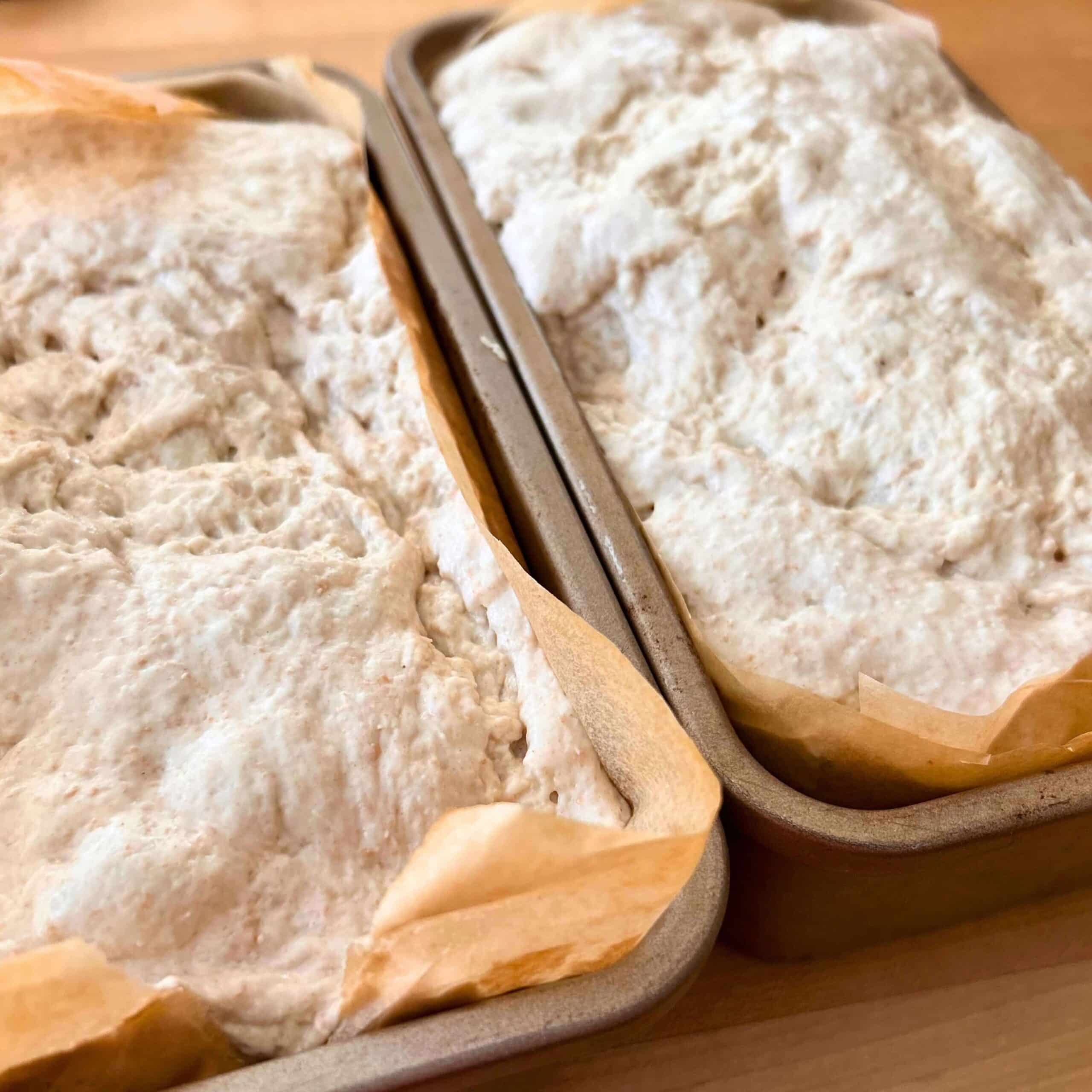
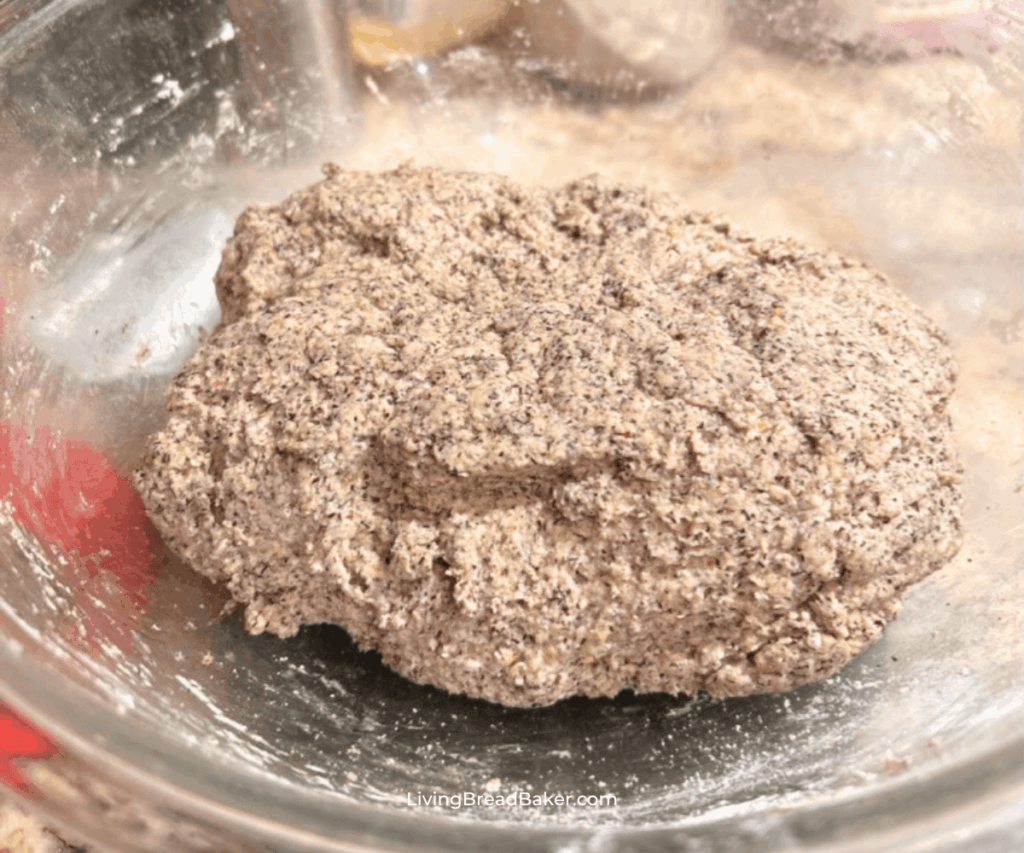
The dough is stickier and a bit like cookie dough, not like the smooth, satiny sourdough bread dough you may have encountered after a bulk ferment.
Gluten-Free Sourdough Often Has a Different Texture
The texture of a traditional wheat sourdough bread is soft and chewy with lots of air pockets.
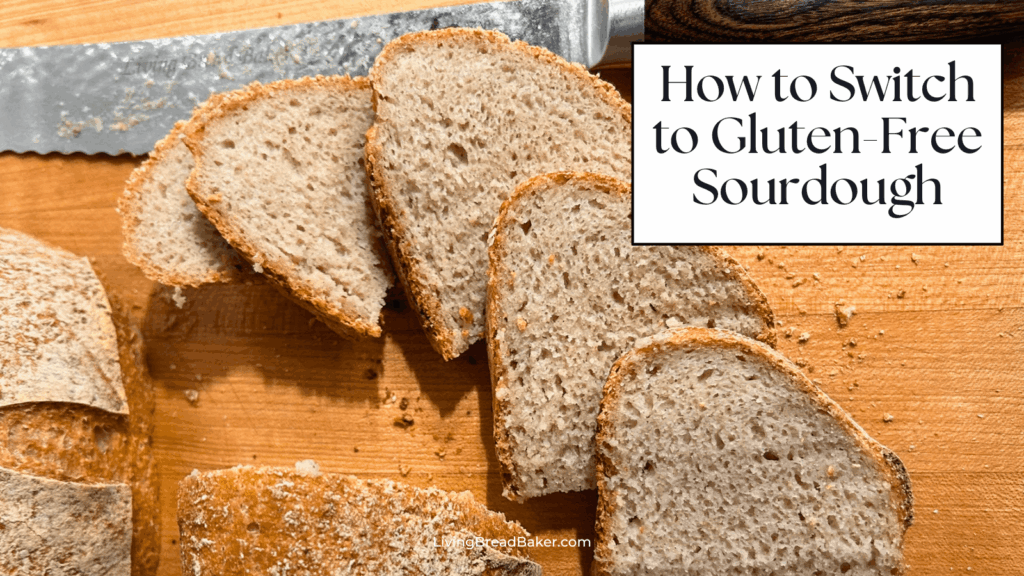
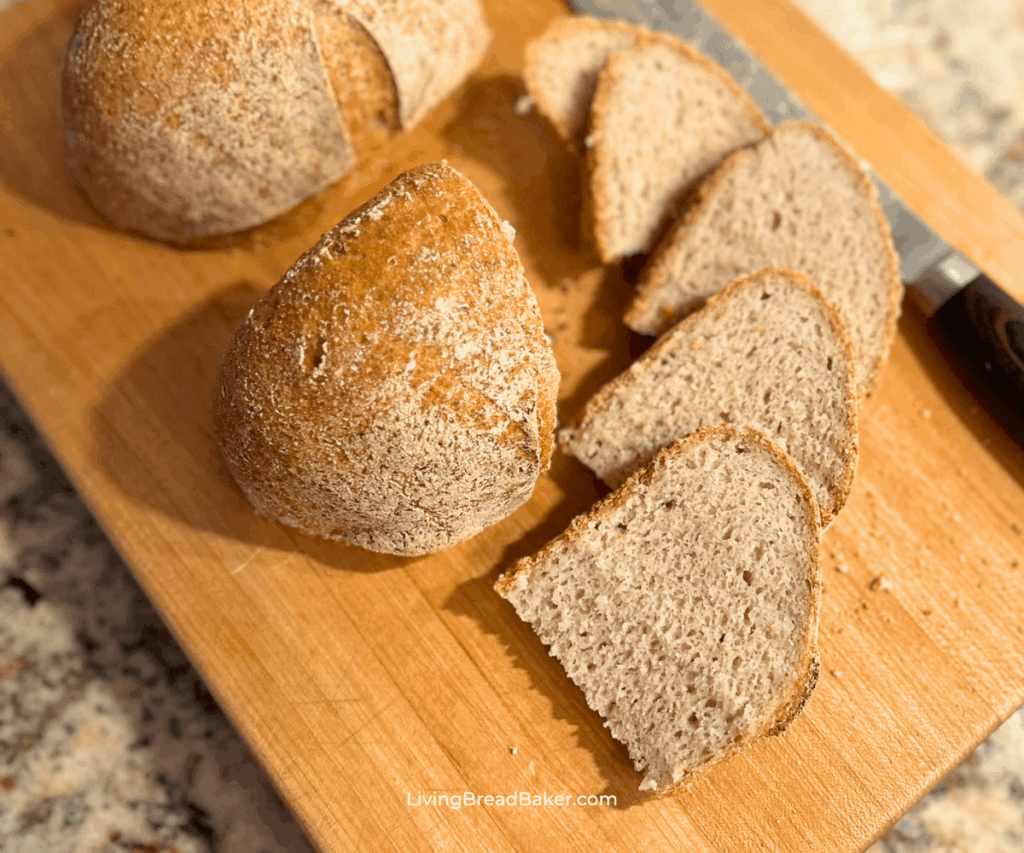
Gluten-free sourdough bread has a denser crumb and has a texture that can be similar to a whole wheat texture.
In some recipes, the gluten-free bread can turn out dry or crumbly. So, if you encounter that, it could be user error or a recipe issue.
Rise and Oven Spring May Look Different
When it comes to the final proof and baking, you will not find the impressive oven spring and dough bubbling over the proofing bowl that can be found with traditional wheat sourdough baking.
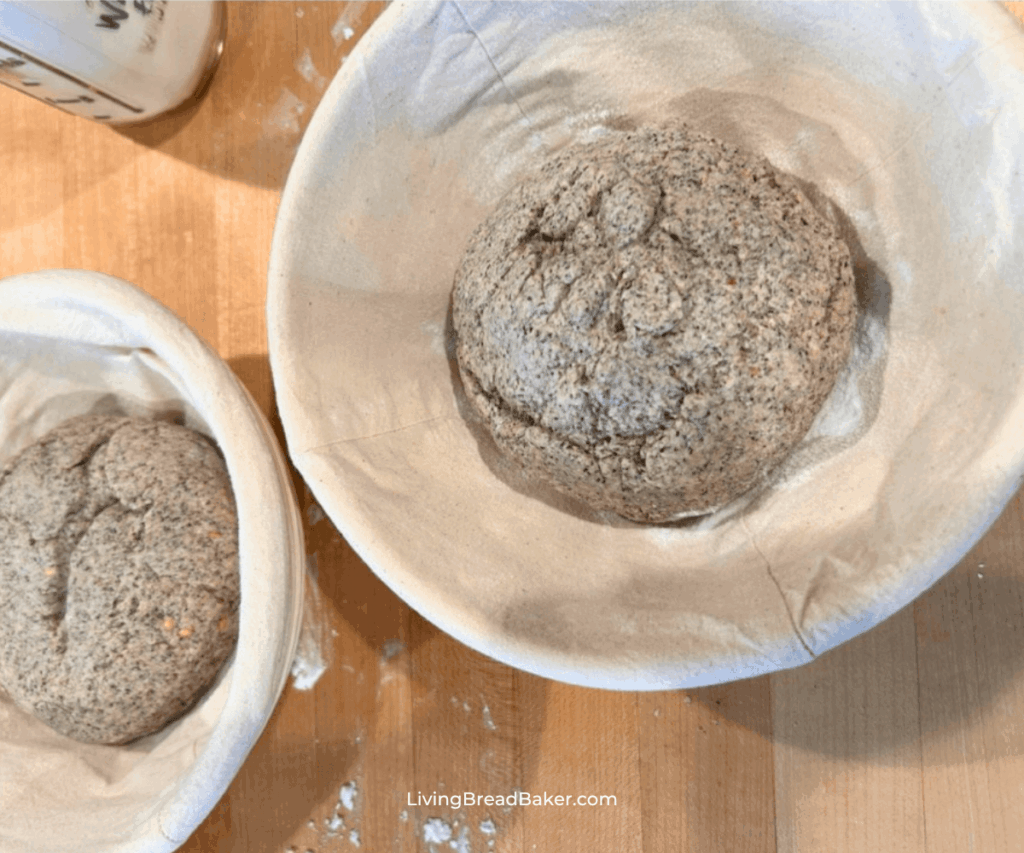
Gluten-free sourdough rises, but often more modestly. The final proof usually has about a 15-30% size increase.
When baking, make sure to use the same high heat, high steam I teach in this post. Once the oven has been preheated properly and the dough has proofed, it must be scored (like traditional sourdough bread) and placed into the hot, steamy oven.
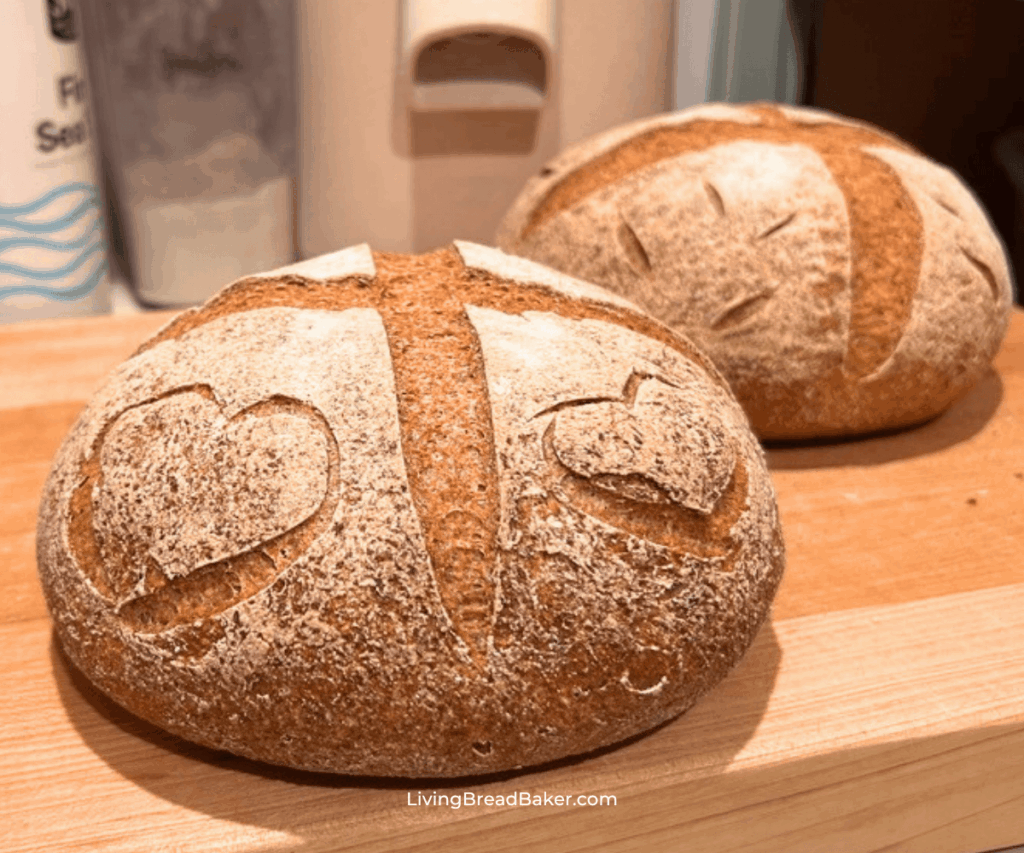
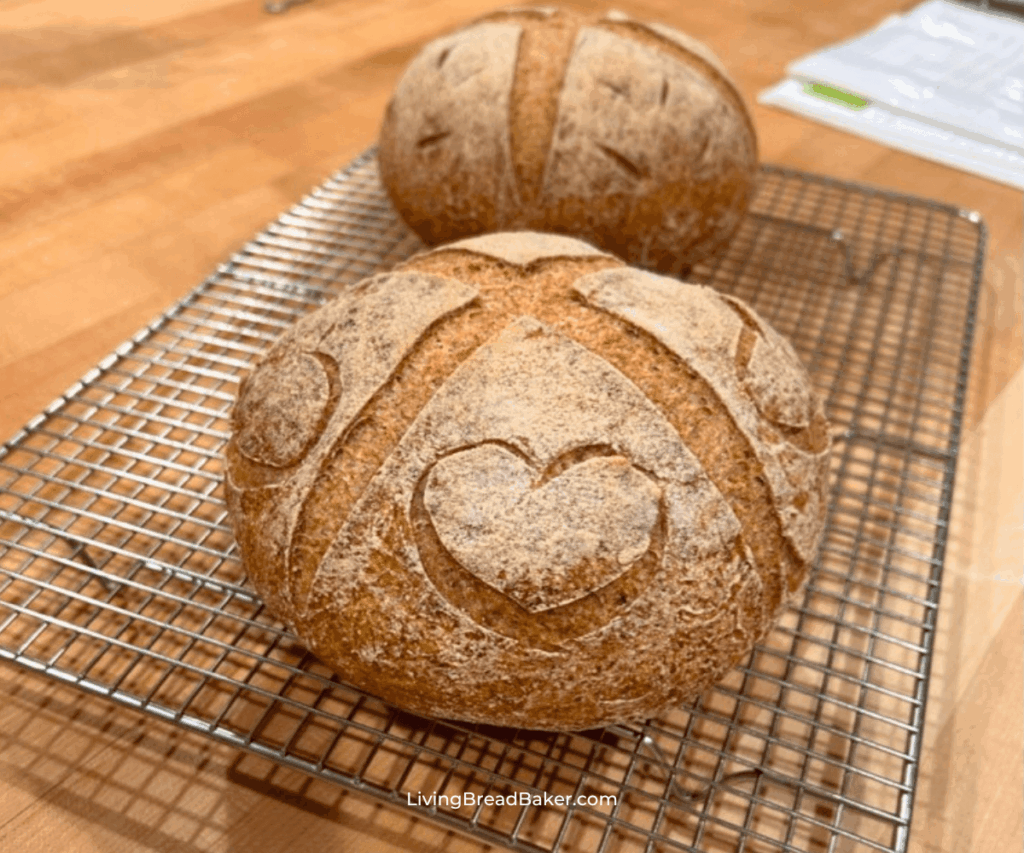
It will rise and open up with oven spring. It’s not as dramatic, but still beautiful.
Gluten-Free Starters Can Behave Differently
Gluten-free sourdough starters need more frequent refreshing or feeding cycles to stay healthy. They are more vulnerable to starter issues like mold if not cared for properly and consistently.
To stay healthy, it is best to use a combination of gluten-free flours since using only one type sometimes can lead to the starter becoming moldy.
In the section about gluten-free sourdough starters below, I’ll discuss best practices.
Best Flours for Gluten-Free Sourdough
Another thing that is different about gluten-free sourdough baking is that you’ll use a combination of gluten free flours. This is different from wheat sourdough which can be made successfully with only one type of wheat flour.
The various combinations in different gluten-free recipes combine a few different whole grain flours with starchy flours for flavor, structure support, and health benefits.
This list has a variety of flours and starches that are most common in gluten-free baking. See the notes for which ones are best.
Whole Grain Gluten-free Flour Varieties
The following are different gluten-free flours that come from seeds or other non-wheat whole grains.
They are usually blended in various combinations for optimal flavor and texture, then mixed with starch to create a cohesive dough.
The list is starts with more common and popular gluten-free flour varieties to less common or less popular.
Brown Rice Flour
Brown rice flour is a very versatile gluten-free flour that is popular in gluten-free recipes.
It ferments well and has a sweet flavor. It is considered a whole grain since it has the outer rice bran ground into the flour which gives it slight tan color and contains more fiber.
One issue with brown rice flour is that it sometimes is contaminated with arsenic. The body naturally can process it out, but it is best not eaten in excess.
White Rice Flour
White rice flour is frequently found in the ingredient list of gluten-free baked goods since it has a mild, sweet flavor and is generally tolerated by many people.
Rice flour ferments well and blends easily in recipes with other flours. In certain combinations it can be reminiscent of traditional recipes made with all-purpose flour.
Downsides of using it are that it is less healthy without the bran and can taste bland if not combined with other flours.
White rice flour also works well for use in shaping gluten-free bread dough.
Note: white rice flour is not the same as sweet rice flour.
Buckwheat Flour
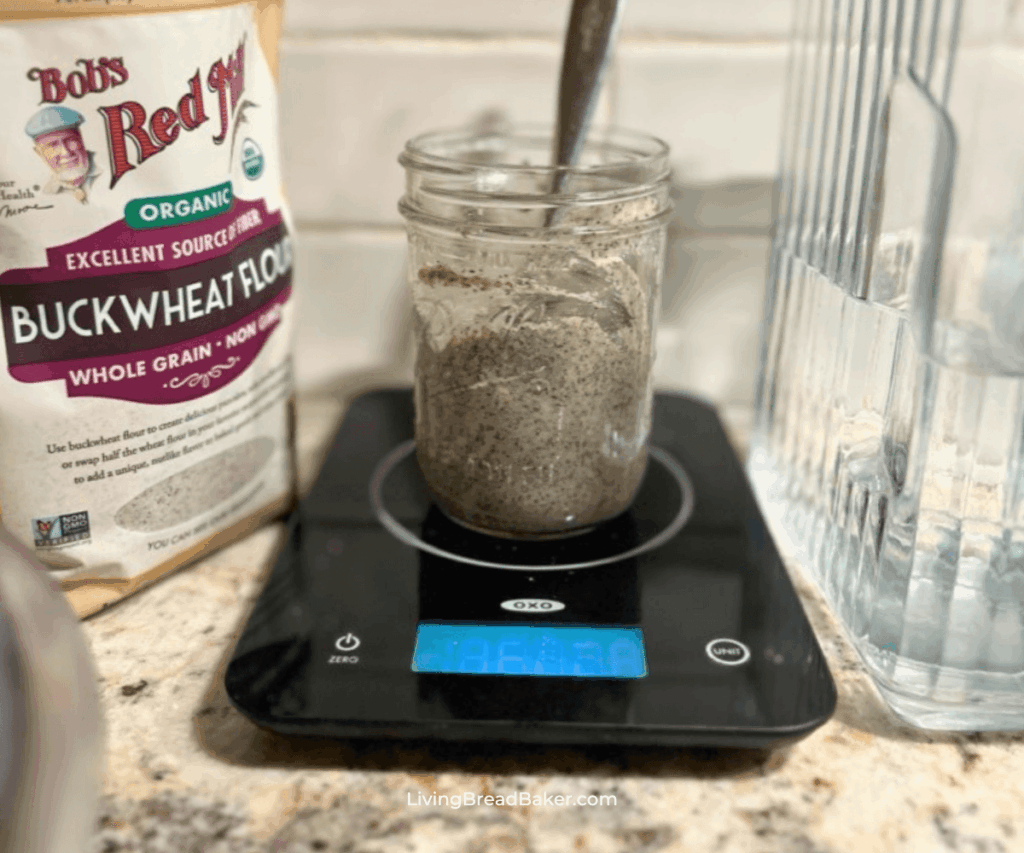
Buckwheat ferments very well and is great for feeding gluten-free starters, but must be combined with other flours otherwise it becomes susceptible to overfermentation or mold.
There are two varieties of buckwheat flour: hulled and unhulled. It starts out as little grains called groats and has a dark hull covering over it.
Flour made with unhulled buckwheat has a dark color with a greyish color with black flecks. Unhulled buckwheat also creates a denser dough and has a more bitter flavor.
Hulled buckwheat flour has a light tan color and is very soft and powdery. It has a good flavor, but can have an earthy flavor if not combined with other gluten-free flours.
Sorghum Flour
Sorghum flour has a sweet nutty flavor and a light texture in bread recipes. Many bakers find that it behaves and tastes like traditional wheat flour.
It combines well with other gluten-free flours in sourdough recipes.
While it has great flavor and texture benefits, it contains antinutrients that impact mineral absorption, its protein is more difficult for the body to absorb and use, and it can be more difficult to digest for some people.
The sourdough process helps to neutralize the antinutrients so this gluten-free flour is one I use often because it works well in so many recipes and tastes good.
Millet Flour
Millet flour has a beautiful golden color with a mild, buttery taste.
It creates a cakey texture in baked goods but can become crumbly or dry if not combined with other gluten-free flours and starches.
It has great nutrients to for your health and for the health of your sourdough starter. This is one I keep on hand mainly to use in my starter feeding.
Quinoa Flour
Quinoa flour has a lot of protein which is important in a good gluten-free bread.
Bread needs protein from the flour to give it structure and hold in the gas created by the sourdough fermentation process.
This flour is not as easy to find and has a slightly bitter taste, but works well when combined with other flours in gluten-free bread recipes.
Teff Flour
Teff flour has a rich color with a nutty flavor with a hint of molasses.
It can become dense if not combined with other lighter gluten-free flours and starch.
It needs a high amount of water to properly hydrate and has some natural gel-forming capabilities, which helps with creating a stronger gluten-free dough that retains moisture well.
Teff flour is also known for being high in nutrients like protein, fiber, calcium, zinc, and magnesium.
Teff has many benefits for health and baking!
Chickpea Flour
Chickpea flour is often used for its high protein content since protein is needed for good bread structure and rise because it can hold in more gas.
It has a earthy bean flavor and can create a dense texture.
It is best to combine it with other gluten-free flours.
Sweet White Rice Flour
Popular in sweet breads like cinnamon rolls or others.
It is made from sushi rice, known as glutinous rice. Don’t worry it’s still gluten-free!
It is great for treats but due to the high sugar and carbohydrates, it’s not as nutritious for everyday gluten-free bread recipes.
As noted above, sweet rice flour is not the same as regular white rice flour.
Oat Flour
Oat flour has a lovely sweet flavor that is comforting and familiar.
It’s perfect in cookies, pancakes, and other quick bread type recipes. It does not work well in yeasted breads.
Oat flour is often contaminated by wheat flour that is processed in the same facility so take great care to find a source that is certified gluten-free.
Also keep in mind that some people who are sensitive to wheat are also sensitive to oats.
Amaranth Flour
Amaranth flour has a light earthy and nutty flavor. It works well in small amounts blended with other gluten-free flours.
Varieties of Starch to Combine with Whole Grain Flours
Starches work well when combined with the whole grain gluten-free flours for a dough that holds together well and a lighter, fluffier texture in the final bake.
In most recipes only one is combined with several whole grain gluten-free flours. Generally gluten-free breads use 20-40% starch in their gluten-free flour/starch blend.
Tapioca Starch/Flour
This powdery ingredient becomes very sticky when mixed with water.
Tapioca is mild with almost no distinct flavor. It is great for absorbing moisture and creating a softer, moister crumb in sourdough breads and other gluten-free baked goods.
This ingredient creates good structure to hold in gas bubbles to create a more chewy, stretchy bread texture.
It is also great for use for flouring a work surface when shaping dough or rolling out dough for crackers or crusts. Use generously when rolling dough especially to avoid dough sticking to the rolling pin.
Potato Flour
This starchy flour is often used to create a more moist bread that doesn’t dry out as fast due to the way potato starch absorbs and retains water.
It is not especially popular in gluten-free recipes since potatoes are in the nightshade family, which some people have food sensitivities to.
Arrowroot Starch/Flour
Arrowroot is a great starch and is very versatile.
It works well in gluten-free recipes and can be used in grain-free baking.
It does not work as well as tapioca flour in bread recipes since it doesn’t create the same elastic consistency or binding ability.
Cornstarch
Cornstarch is keeps the dough drier for a tender, light texture which makes it best for cakes, pancakes, cookies or pie crusts.
It is not great in sourdough bread baking because it creates a dry, crumbly final product.
Grain-free Flour Varieties
Almond Flour
Almond flour contains protein and fat which creates great flavor in many gluten-free recipes, but it does not bind well which creates a crumbly texture if not combined with starch or other flours.
It is best for pies, cakes, cookies, pancakes, or macarons.
It is also one of the most expensive gluten-free flours.
Cassava Flour
Cassava flour has a mild flavor and is very versatile–elastic and almost wheat-like in recipes!
This flour works especially well in yeast breads, pizza dough, and tortillas.
It has a high amount of carbohydrates and can become dense if not combined with a starch or other ingredients.
Coconut Flour
Coconut flour has a sweet, coconut flavor. It is a very dry flour that needs a lot of water to properly hydrate.
It can have a dense texture in recipes so it is best blended with other flours.
Often used in muffins, cakes, cookies, or pancakes.
Summary of Gluten-free Flours
The big winners for gluten-free sourdough bread baking are:
- White rice flour
- Brown rice flour
- Hulled buckwheat flour
- Sorghum flour
- Millet flour
- Quinoa flour
- Teff Flour
- Tapioca Starch
In my baking, I most often use white rice, hulled buckwheat, sorghum, millet, and tapioca starch.
I highly recommend getting some glass or plastic storage containers to contain your collection of gluten-free flours and starches. Using the original packaging can be liable to get contaminated by pantry moths.
What About Gluten-free Flour Blends?
Some gluten-free bakers use premade flour mixes, but I have found that those do not work well for getting the best texture, flavor, or health benefits.
Premade gluten-free flour blends are great for cookies, muffins, or other quick recipes, but they tend to be bland in flavor and perform poorly in sourdough bread.
Many blends also have enhancements like xantham gum, guar gum, or other enhancements which can be disruptive to the digestive system for some people.
If you love flavorful true sourdough bread, like me, I highly recommend finding recipes where you use your own blend of gluten-free flours. You can find recipes like that in the resources list below.
How to Make a Gluten-Free Starter
This is process is very similar to my process for making a traditional wheat-based sourdough starter, the biggest difference is the flour types used.
This method takes a few days but is worth it to get the right start!
The following are steps to get started in making your gluten-free sourdough starter.
Ingredients and Tools Needed to Make Your Starter
Find or purchase the following items:
- Pint size mason jars
- Rubber band
- Square of clean fabric or coffee filter to cover jar
- Clean spoon or a wood skewer
- Food scale for better accuracy
- Water
- Buckwheat flour (hulled or unhulled—unhulled is preferred)
- Brown rice flour*
*There are other flour varieties that can be used but these are dependable and frequently used in gluten-free sourdough starters. I started mine with brown rice flour but later switched to millet in place of the brown rice flour, but brown rice has excellent properties for getting your starter going!
Step 1: Getting Started, Day 1
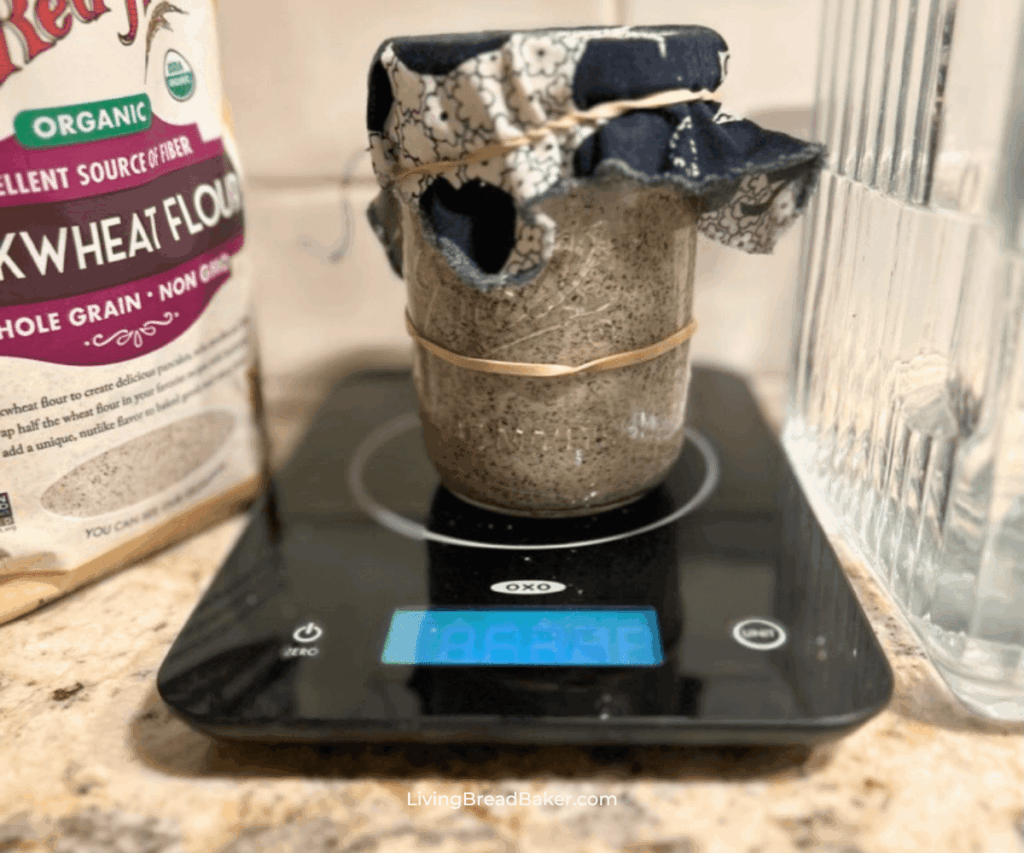
Add 80 grams (¼ cup and 1 T.) of water to a clean jar first. Then add 40 grams ( ¼ cup) buckwheat flour and 40 grams (¼ cup) brown rice flour.
Mix well, cover with the fabric or coffee filter held in place with an elastic band, and leave at room temperature for 12 hours.
Step 2: Discarding
If you are familiar with traditional (wheat) sourdough, you should be familiar with the process of discarding which is vital to beginning and caring for a healthy gluten-free sourdough starter.
After 12 hours have passed, get a new mason jar and transfer 20 grams (about 1 heaping tablespoon) of the mixture from the original jar.
Using the new jar with the 20 grams of starter mixture, feed it with 80 grams (¼ cup and 1 T.) of water, 40 grams (¼ cup) buckwheat flour, and 40 grams (¼ cup) brown rice flour. Cover the jar like before and leave at room temperature for 12-24 hours.
The original jar with the remaining mixture can be sealed with a mason jar lid to use in a discard recipe or the mixture can be discarded into the trash and jar washed out.
Step 3: Repeat discard and feed process
Repeat the process of discarding the starter mixture and saving 20 grams to feed with 80 grams (¼ cup and 1 T.) of water, 40 grams (¼ cup) buckwheat flour, and 40 grams (¼ cup) brown rice flour every 12-24 hours for 4 to 7 days.
When is my Gluten-Free Starter Ready?
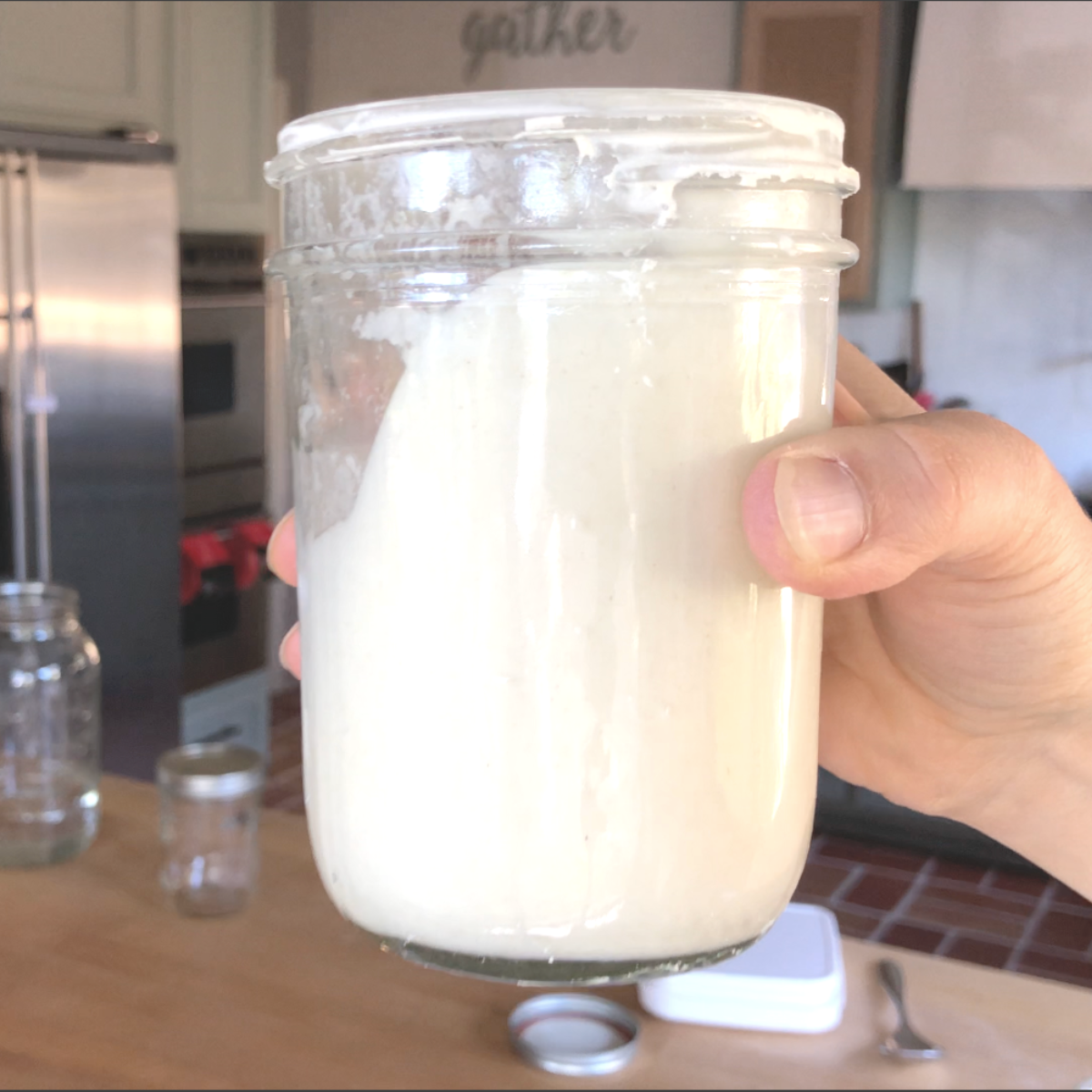
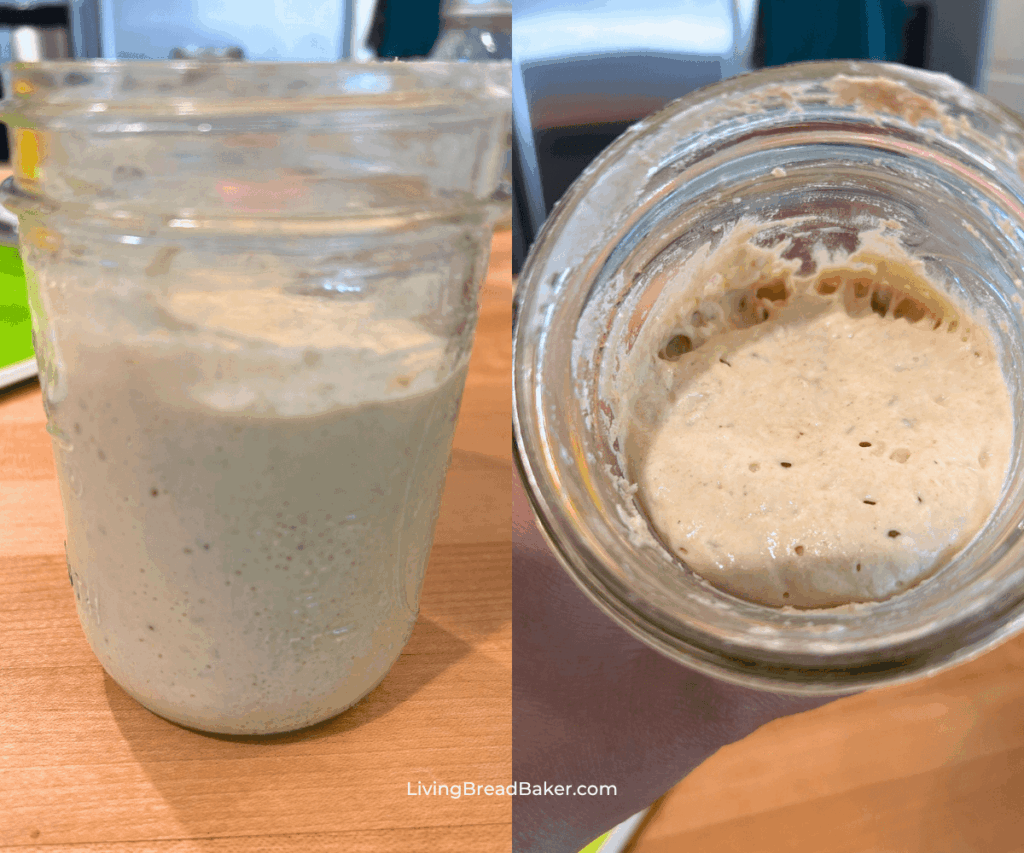
When you have been doing this process for at least 4 days, your starter has a pleasant fruity or yeasty smell, and it grows almost double in size.
It is helpful to use another rubber band, permanent marker, or wet-erase marker to mark where the mixture sits after feeding to see how much it grows after 12 hours.
You should see lots of bubbles in the mixture through the sides of the jar.
If you can, I recommend doing the discard and feed (I call this process refreshing the starter) step twice a day (about 12 hour intervals) to get your starter going faster and to help it stay in optimal healthy.
Using and Caring for Your Gluten-free Sourdough Starter
Once its ready, its time to begin your gluten-free sourdough baking journey! As well as your continued care of your newest pet—your starter.
The use and care is very similar to traditional wheat sourdough starters.
You must refresh (discard and feed as described in step 3 above) your gluten-free sourdough starter 8-12 hours before you plan to mix up dough for a recipe.
I have found that a gluten-free sourdough starter needs more consistent care than a regular wheat based one due to the faster fermentation rate. This means that if your starter is left at room temperature (especially in warm weather), it needs twice daily refreshing.
Storing Your Gluten-free Starter in the Fridge
If there is a lull in your gluten-free sourdough baking plans, you don’t plan to bake for a few days, or are traveling, place your starter in the fridge to maintain its health.
At minimum, you should get the starter out of the fridge and refresh 12 hours before you plan to make a recipe.
Tip: If its been stored for more than a few days, I recommend taking the starter out 24 hours before you plan to make a recipe so that you can do 2 cycles of refreshing 12 hours apart.
Troubleshooting Common Gluten-Free Sourdough Problems
Learning to bake gluten-free sourdough is a process! Be kind to yourself and remember that each bake teaches you and will improve your skills.
The following are some common issues you may face when baking gluten-free sourdough as well as potential fixes and solutions.
Gluten-free Sourdough Starter Issues
The following are some common issues that you may experience with your starter and suggested solutions:
- Gluten-free sourdough starter is not rising.
- If your starter is new, it may need more cycles of refreshing.
- If that is not the case, a starter might not be rising properly because it is not being refreshed consistently or often enough. Make sure to take out almost all of the previous (older) batch, leaving only a tablespoon amount in your jar (or transfer the tablespoon to a new clean jar), then feed the starter 80 grams (¼ cup and 1 T.) of water, 40 grams (¼ cup) buckwheat flour, and 40 grams (¼ cup) brown rice flour (or with your selected blend).
- More frequent refreshing and having a small amount of old starter to a large amount of food (about 10% old with 90% new food by weight) is the key to strengthening your starter or keeping it vibrant!
- Too much gluten-free starter discard. Saving some sourdough discard in the fridge is always highly recommended since it is useful as an emergency backup or making into gluten-free sourdough discard recipes. If you have more than a jar in your fridge, it may be time to look at your baking schedule to make it more manageable. If you are only baking one time each week, your starter can be refreshed just once before use and then the active starter is added to the dough mixture while the remainder can be put back into the fridge to store until the next bake.
- Gluten-free flour switch causes discolored liquid on top of starter or on surface of starter. First, make sure you are using a mixture of two gluten-free flours for best results like brown rice and buckwheat or millet and buckwheat. If you have recently switched your feeding flour, this can take the starter some time to adjust—sometimes as long as 2-3 weeks. Pour off the liquid, if present. Continue to regularly refresh your starter, do it on a 12-hour interval to make sure its frequent enough.
- Mold on top of gluten-free starter. If there’s mold on top of your starter, you have 1-3 options:
- Make a new starter and discard the old one.
- If you have discard, use a small amount of that to create a new starter.
- If the mold is not severe and you want to try to salvage it, some people have taken off the top layers impacted by mold to take out a core sample to try to begin again.
- My recommendation: Use discard or start over.
Dough Issues
Here are some common dough issues and how to address them:
- Dry flour in dough. If your dough seems to have dry bits of dough or isn’t combining properly, the biggest recommendation is to thoroughly mix the dry ingredients in a separate bowl before adding the flour mixture to the wet ingredients—this is especially important for starch which can become too gummy if not combined properly. Also, make sure to scrape the bottom of the bowl when you are mixing, whether you’re mixing by hand or using a machine mixer since flour tends to get stuck on the bottom.
- Dough is too dry. Proper hydration is essential for gluten-free sourdough bread. It is better to err on the side of more wet than more dry. If your dough is dry then you will need to add more water. Try adding 10-20 grams, mix in then feel the dough. If it is still dry, continuing adding a small amount (about 10 grams) of water, mix and test again.
- Dough is too wet. First, make sure you are properly measuring ingredients using a food scale. If your recipe is using psyllium husk don’t substitute it! And make sure to give your psyllium and water mixture time to gel, it takes a few minutes to get the right consistency. If you’ve given it time and it doesn’t improve, try adding a small amount of your flour ingredients and mix again until it has the consistency the recipe describes.
- Dough is too sticky. Some gluten-free bread doughs naturally have a more sticky consistency than traditional wheat bread dough so if you’ve followed the recipe properly without substitutions, try using a rounded plastic dough scraper to finish mixing and shape your dough to reduce sticking and use a dusting of tapioca starch or white rice flour to shape your dough
Bread Dough Not Rising
If your bread dough is not rising well during your proof, here are a few potential causes and solutions:
- Sourdough starter is not healthy or active enough. Make sure you are refreshing properly by discarding the majority of the old batch and feeding the remaining 20 grams (heaping 1 T.). Look for signs of strong activity like nearly doubling in volume and lots of air bubbles after at least two cycles of refreshing.
- Dough needs more time to rise. Check your fermentation timeline. Are you giving your dough enough time to proof? If your dough is put in the fridge for part of the proof, make sure it sits at room temperature for 1-3 hours before you put it in the fridge.
- Dough formula issue. Did you use enough water? Were your ingredients measured properly? Did you use the correct types of flour and binding agent (e.g. psyllium husk)? Flour substitutions and mismeasuring water can majorly impact the consistency and behavior of the dough. The dough must be scaled accurately so I highly recommend a food scale.
Lack of Oven Spring or Burning in Oven
If your bread is burning in the oven or doesn’t have an oven spring where it does a final expand in size, there are some potential solutions:
- Make sure there’s plenty of steam to start your bake. Lean bread doughs made without fats, eggs, or other enriching ingredients need a high heat, high steam environment to have their initial burst of oven spring. The steam helps the outside of the dough to stay soft and pliable like a balloon so it can expand. Lack of steam causes the outside of the dough to harden (create a crust) prematurely.
- Remove the Dutch oven. If you have a Dutch oven that allows you to remove the top like my Lodge Combo Cooker and continue baking using the shallow bottom part, try doing the second stage of your bake directly on the rack to avoid the extra contact heat from the cast iron.
- Oven temperature too high. If everything else seems correct in your baking process, check to make sure your oven is baking at the right temperature. Sourdough bakes have two stages: high heat, high steam and high heat, no steam.
- Reduce bake time. Some ovens circulate air differently which accelerates baking or you may be at a higher elevation which requires a reduction in baking time when using high heat. Reduce your bake time by 5-10 minutes and closely monitor the bake so that you can take it out if it is becoming too dark.
- Adjust rack position. If your bread is burning on the bottom, move it up a level to be further from the lower heating element.
Gummy Sourdough
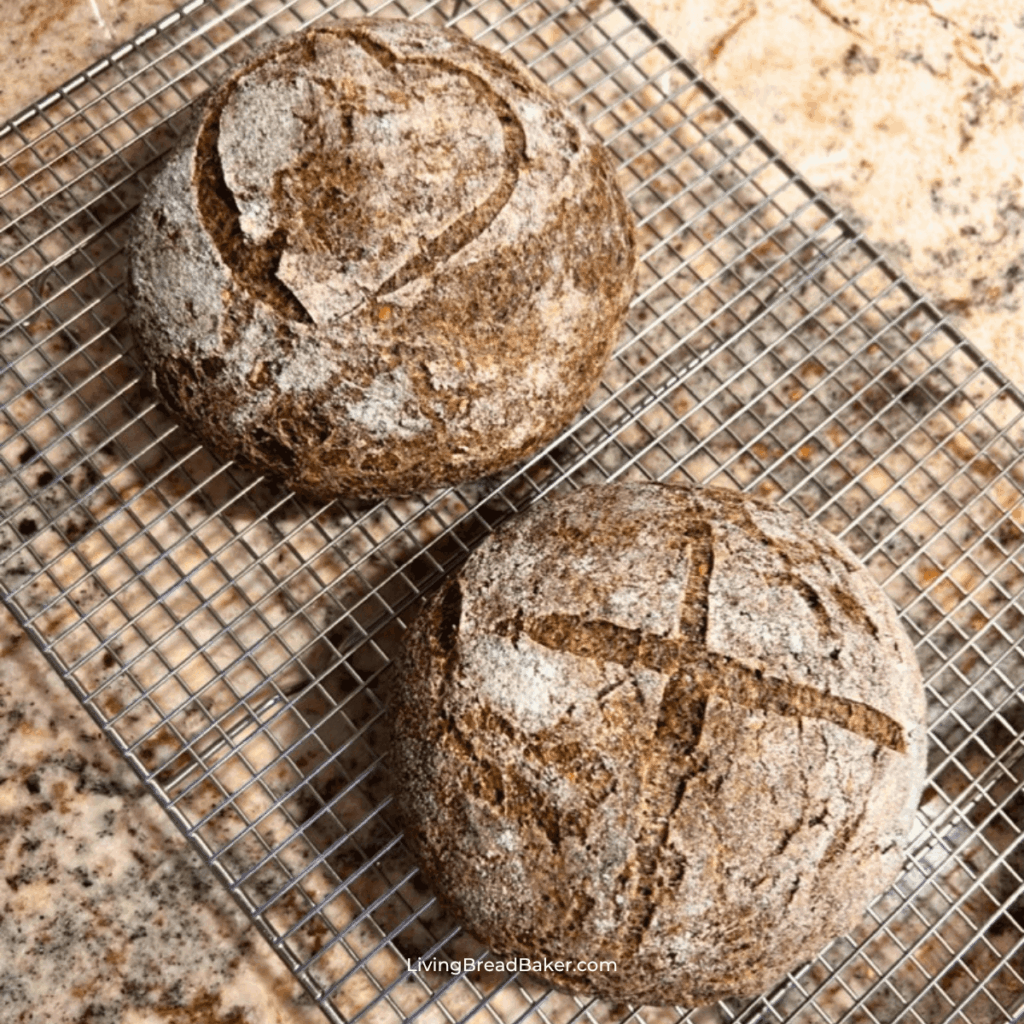
Here is a rundown of potential causes and solutions for gummy sourdough:
- Bake time needs to be longer. Due to the higher hydration, gluten-free sourdough bakes longer than traditional wheat sourdough. Make note of the bake time that resulted in the gummy bread and add 5 to 15 minutes depending on the severity of the gumminess.
- Longer cooling time. The cooling stage is the final part of the baking process and it is especially important with gluten-free sourdough baking. Let your gluten-free sourdough bread cool for at least 3 hours before cutting, overnight is optimal usually.
- Use a finer gluten-free flour. Some gluten-free flour varieties might run coarser than other. For the best texture, find a finely ground or extra fine variety.
Helpful Gluten-Free Sourdough Resources
There are a lot of gluten-free baking and gluten-free sourdough resources out there, but I have found some favorites to share with you!
This list is not exhaustive but it does include resources I have found vital to my family’s gluten-free sourdough journey.
- Marissa of Wyndelin Farm & Kitchen FREE Gluten-free Sourdough Course: It has amazing videos of the entire process and multiple recipe demonstrations done in collaboration with Sourdough Schoolhouse that her family has made free in memory of her passing. What an amazing woman and what a gift.
- My Best Gluten-free Sourdough Bread recipe
- Bakerita Gluten-free Sourdough Bread Guide
- Our declared winner of recipes we tried: gluten-free sourdough bread recipe from George Eats.
- Gluten free ‘white bread’ sourdough by George Eats
- Wholesome, easy to make, yummy Buckwheat sourdough bread recipe from George Eats. It only uses one main whole grain flour along with the starch which feels extra simplified. Flavor is like a comforting whole wheat bread.
- This is the best gluten-free sourdough pizza crust we have made or tasted from George Eats! I highly recommend using a pizza steel and tips I describe in this post but the one important suggestion for this dough is to divide the dough, place each piece on a square of parchment paper (please use this brand to avoid a headache with cheaper parchment that does not remove properly), dust generously with tapioca starch and press into a thin pizza crust, then bake on preheated steel or baking stone for 5 minutes to set the crust, top, then bake for 7-10 more minutes.
Note on Finding Gluten-Free Baking Resources
You may have noticed that most of my recipe resources above are from one source, which is another interesting thing I’ve discovered in this switch to gluten-free sourdough baking is that there is a lot of variation in approaches to gluten-free sourdough baking.
Use caution when trying to find recipes, troubleshooting or help online because there are so many different approaches. Some of these approaches conflict with one another.
And sometimes there’s just poor advice, like a well-meaning facebook community user who suggested people make a gluten-free starter with kombucha. I shudder when I think of my previous attempts at gluten-free sourdough and how poorly they went!
Anyway, learn one method from one teacher. Then find recipes that fit your food preferences or allergy prevention needs.
In our home we are avoiding several other ingredients for one family member like dairy, soy, white potato, oats, and some others, which is why I have found most of my favorite recipes from George Eats who creates recipes that are gluten-free and FODMAP friendly.
If you find a resource you love, let me know! Maybe it’ll be added to the list!
FAQ
Beginner Transition Questions
- Can you turn a regular sourdough starter into a gluten-free starter?
- Yes, but your gluten-free sourdough starter will never be truly gluten-free which could be harmful to someone with celiac disease.
- Do I need to start a new gluten-free sourdough starter from scratch?
- Yes, that is the best practice. See the step by step guide in this post above or the free gluten-free sourdough course linked in the resources above.
- Is gluten-free sourdough healthier than regular sourdough?
- Generally yes. Gluten-free flours are more gentle on the gut and better for digestion and the sourdough process helps to make the nutrients more bioavailable for your body to use. Just make sure to use a recipe that contains about 60-80% whole grain gluten-free flour by weight for more nutrients and avoid recipes that use starch as the main “flour” ingredient.
- Does sourdough fermentation remove gluten?
- No, sourdough fermentation in traditional wheat sourdough does not remove the gluten. Sourdough fermentation breaks down the gluten to make it more digestible for many people but it does not remove the gluten from the traditional wheat-based bread.
- Is gluten-free sourdough easier or harder to make?
- When it comes to starter care, it is about the same. For dough mixing, gluten-free sourdough is more difficult because it requires a variety of flours, but a food scale and having your varieties of gluten-free flours on hand helps simplify this step. Shaping is much simpler with gluten-free sourdough since there are less steps involved.
- Why does gluten-free sourdough behave differently?
- Gluten-free sourdough ferments more quickly which adjust the fermentation schedule. It also lacks gluten so it is shaped differently than wheat sourdough. See more differences in behavior in the section above.
Starter Questions
- What flour works best for a gluten-free sourdough starter?
- A blend of two flours works best. Use hulled buckwheat and brown rice flour or hulled buckwheat and millet flour. Hulled buckwheat is great paired with another whole grain flour but not on its own.
- How long does it take to make a gluten-free starter?
- Usually 3-7 days, depending on how warm the environment is and how frequently the starter is refreshed.
- Why is my gluten-free starter not bubbling?
- Is your starter new? Give it time to develop.
- Has your starter been refreshed at least twice recently? Refresh your starter twice at 12 hour intervals and check activity.
- Has it been stored for a long time? If it was stored for longer than two weeks, you might need to refresh it twice daily for 2-3 days to restore vitality.
- Is your starter new? Give it time to develop.
- Does gluten-free sourdough starter smell different?
- Yes, because along with the ripe fruit/yeast smell from fermentation you will smell notes from the flour used. White flour has a naturally sweet smell so it smells sweeter. Buckwheat will give a more earthy, bitter smell. Brown rice has a pleasant sweet smell. Millet has an earthy, and almost corn-like smell.
- How often should I feed a gluten-free sourdough starter?
- You must discard and feed at least every 12-24 hours if kept at room temperature (every 12 hours if in a warm temperature environment).
- Can I use tap water for a gluten-free starter?
- Yes, filter it if possible for optimal results.
Dough & Texture Questions
- Why is gluten-free sourdough dough wetter than regular dough?
- The ingredients in gluten-free sourdough dough like psyllium and many flour and starches need a lot of water to properly hydrate.
- Is gluten-free sourdough supposed to look like batter?
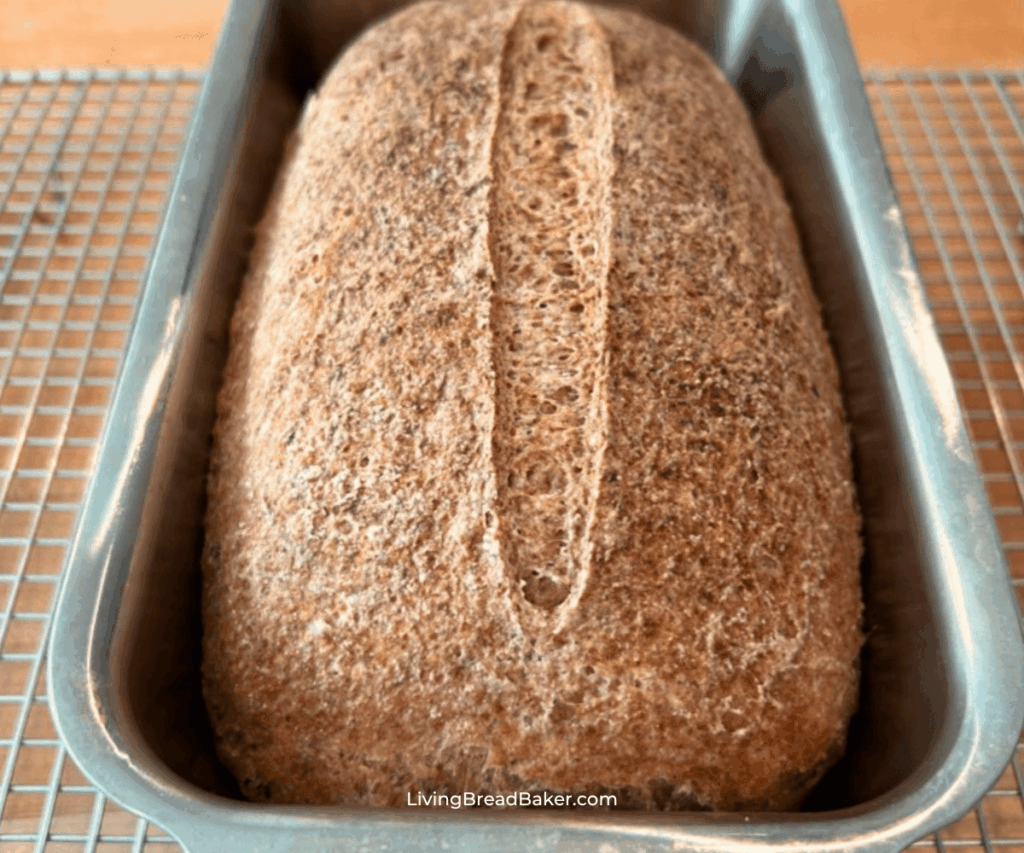
- Some gluten-free sourdough bread dough recipes look like batter at first, especially if it is a loaf or pan bread. This is normal. Usually recipes for boules or free form rolls that don’t use a baking container will be less batter like.
- Why is my gluten-free sourdough gummy?
- Potential issues are not baking the bread long enough, not cooling long enough, or baking at a low temperature. See the full troubleshooting section above for more help.
- Why is my gluten-free sourdough dense?
- Gluten-free sourdough bread is generally more dense than its traditional wheat sourdough counterpart. But it should have softness when pressed. If it is too dense, does not give hardly at all when you press the loaf, it could be a recipe issue, bake issue, or a starter issue.
- If there is not enough hydration for the ingredients or the flour types used are not extra fine, this will result in a tough loaf.
- Make sure you are using high heat, high steam to begin your sourdough bake to get good oven spring and expansion. Without the steam, your bread will develop a crust too quickly and turn out dense. See this post for more help with a steamy bake.
- Gluten-free sourdough bread is generally more dense than its traditional wheat sourdough counterpart. But it should have softness when pressed. If it is too dense, does not give hardly at all when you press the loaf, it could be a recipe issue, bake issue, or a starter issue.
- Can gluten-free sourdough get a good oven spring?
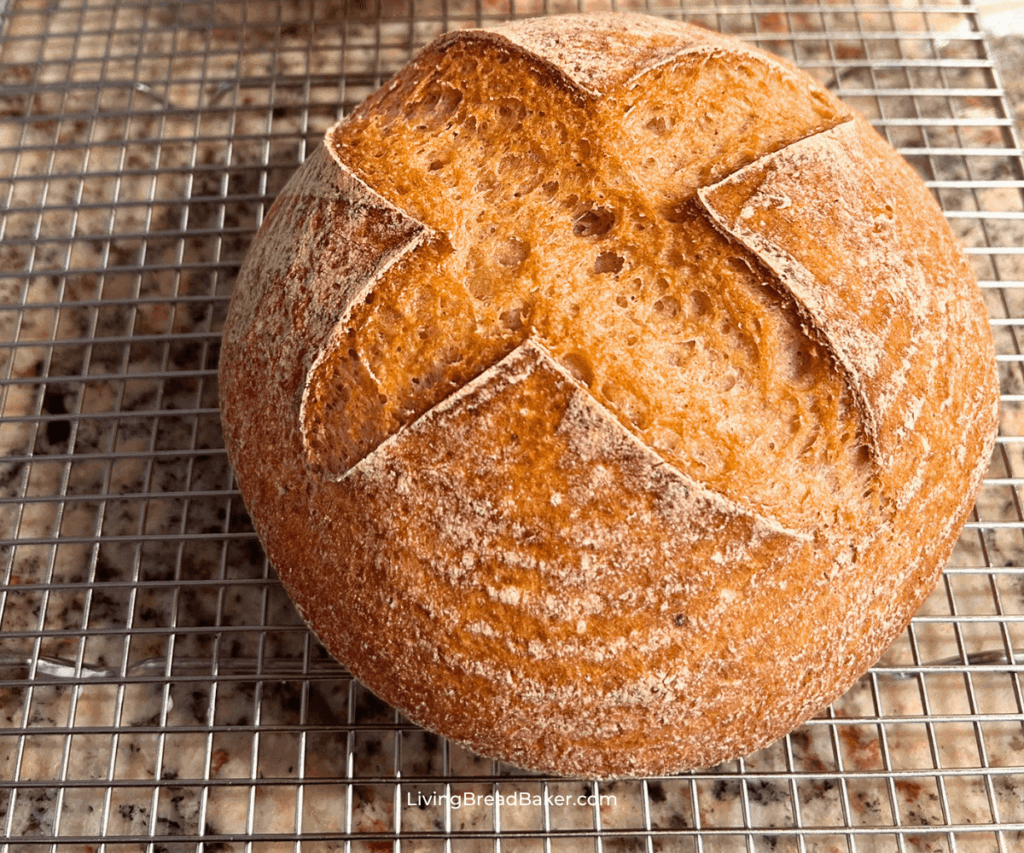
- Yes, with proper fermentation in the proof (giving it enough time but not overproofing) and the right oven conditions, your bread should have a good oven spring. It won’t be as showy as some white sourdough breads made with refined high-gluten wheat based flour but still beautiful.
- Does gluten-free sourdough need stretch and folds?
- No. Stretch and folds are beneficial for developing gluten. They have no impact on gluten-free sourdough.
Baking Questions
- What is the best flour blend for gluten-free sourdough bread?
- Best is relative. Some people have sensitivities to certain flours and best can be relative to taste, health benefits, or appearance. In general, the rule of 20-40% starch and the remainder of the flour weight coming from a blend of whole grain gluten-free flours with at least one containing high protein. See the flour guide above for more guidance.
- Do I need psyllium husk for gluten-free sourdough?
- It is highly recommended for a gut healthy bread that is free of processed ingredients like xanthan gum which can be irritating to the gut. So for the best gluten-free sourdough, yes, you need psyllium husk. There is a difference between psyllium husk and psyllium husk powder, make sure to check the recipe you’re using. Here is a brand of psyllium husk I recommend.
- Can I make gluten-free sourdough without xanthan gum?
- Yes! Using psyllium husk is preferred for creating a stretchy gluten-free bread that holds together and rises well. See previous FAQ.
- What tools are helpful for gluten-free sourdough baking?
- Recommended tools listed below or see my tips you need to get started without overspending:
- Mixing bowls
- Food scale
- Bowl covers
- Rounded plastic dough scraper
- Proofing bowls
- Loaf pan (see this post for how to make a parchment paper liner)
- Parchment paper
- Bread Lame
- Dutch Oven
- Water spray bottle
- Bread knife
- Freezer bags
- Recommended tools listed below or see my tips you need to get started without overspending:
- Can I bake gluten-free sourdough in a Dutch oven?
- Yes! Gluten-free sourdough boules bake beautifully in a Dutch oven.

Cross-Contamination Questions
- Can gluten-free sourdough be contaminated by regular flour?
- Yes, you will need to keep any wheat flour completely separate from gluten-free flour, work areas, tools, toasters, and your gluten-free sourdough starter or dough. Even previous exposure can linger on tools and surfaces.
- Do I need separate tools for gluten-free sourdough baking?
- If you have celiac or severe sensitivity, yes. It is also recommended to replace any porous tools (wood, plastic, silicone), your toaster or flour mill to keep your sourdough gluten-free from previous gluten baking.
- Can I keep a gluten-free starter near regular sourdough starter?
- Keep them separate on different work surfaces. If stored in fridge, there is a food safety rule that the safest foods go up top and foods that could cause contamination (e.g. raw meat) go in the bottom of the fridge, so store your gluten-free starter on a higher shelf in the fridge than the wheat based starter.
Practical Lifestyle Questions
- Is gluten-free sourdough expensive to make?
- Gluten-free sourdough is generally more expensive to make than traditional wheat based sourdough. For prices at Whole Foods and Amazon in May 2026, a standard wheat sourdough loaf costs $1.76 to make while our favorite gluten-free sourdough bread costs $5.48 to make. But for context, buying a loaf of gluten-free sourdough at the same Whole Foods that is tiny and comes frozen is $12.99!! While a wheat based sourdough loaf bought from Whole Foods is $5.
- Some ways you can make gluten-free sourdough less expensive:
- Buy ingredients in bulk (small gluten-free flour bags are expensive for what you get at the grocery store). The same gluten-free sourdough bread would cost an estimated $2.63 per loaf if the ingredients were bought in bulk. See the Shop this Post section for links to bulk retailers
- You can also reduce the use of specialty gluten-free flours. Recipes that use more rice flour are going to be less expensive than recipes that use a lot of hulled buckwheat, sorghum, teff, or nut-based flours. If I use less specialty flour and more rice flour in the gluten-free bread used in this example, my cost would be $4.96 per loaf with Whole Foods/Amazon or an estimated $2.37 using bulk purchased ingredients.
- Some ways you can make gluten-free sourdough less expensive:
- Gluten-free sourdough is generally more expensive to make than traditional wheat based sourdough. For prices at Whole Foods and Amazon in May 2026, a standard wheat sourdough loaf costs $1.76 to make while our favorite gluten-free sourdough bread costs $5.48 to make. But for context, buying a loaf of gluten-free sourdough at the same Whole Foods that is tiny and comes frozen is $12.99!! While a wheat based sourdough loaf bought from Whole Foods is $5.
- Can beginners make gluten-free sourdough successfully?
- Yes! Once you’ve made a starter, you’ve done the hardest part of gluten-free sourdough baking, especially if you have experience baking traditional sourdough bread.
- What’s the easiest gluten-free sourdough recipe to start with?
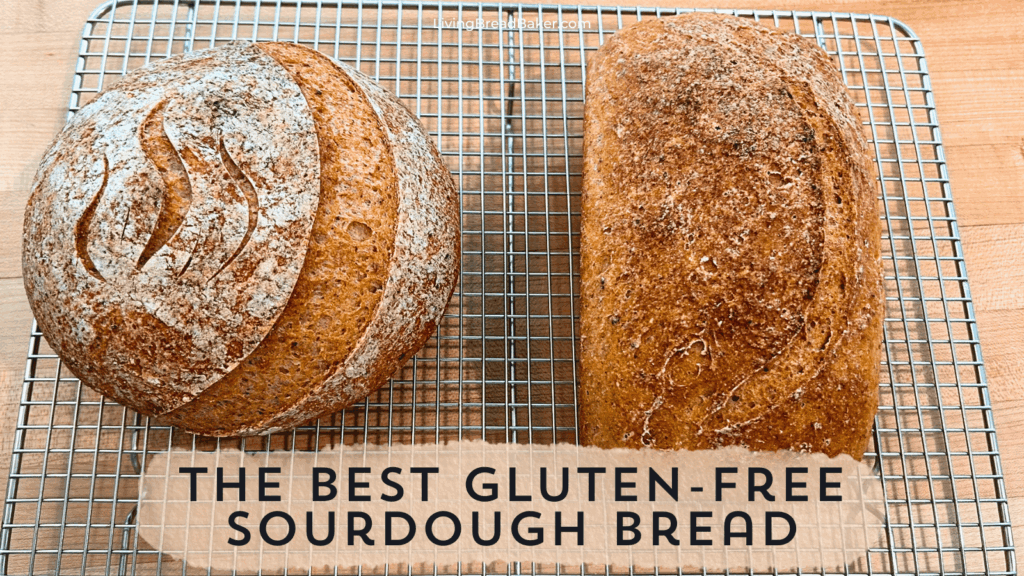
- The Best Gluten-Free Sourdough Bread (Dairy-Free, Vegan)
- George Eats has some wonderful recipes the buckwheat one doesn’t use a lot of ingredients and uses a loaf pan which is helpful for beginners:
- Gluten-free Buckwheat Sourdough Loaf by George Eats
- If you love boules, this is the recipe I’d recommend Gluten-free Sourdough Bread recipe (FODMAP friendly) by George eats
- How long does gluten-free sourdough stay fresh?
- Stored in a bread box, I’d keep it for 2-3 days in there, unless it is an extra sticky moist bread which should be stored in the fridge. If you aren’t using bread as quickly, slice the whole loaf, then place slices in a large freezer bag with layers of parchment paper between slices. See this post for how to freeze sourdough

Living Bread Baker posts mentioned
The Best Gluten-Free Sourdough Bread (Dairy-Free, Vegan)
How to Freeze Sourdough Bread, Scones, & More (Easy & Fast)
How to Bake Sourdough without a Dutch oven: Manual Steam Method
Easy Sourdough Pizza Crust Recipe and Guide for Oven Baking
Shop this post
Large 32 oz. mason jars for storing flours
Plastic storage containers for gluten-free flour
Loaf pan (see this post for how to make a parchment paper liner)