How to Turn Overproofed Sourdough into Focaccia
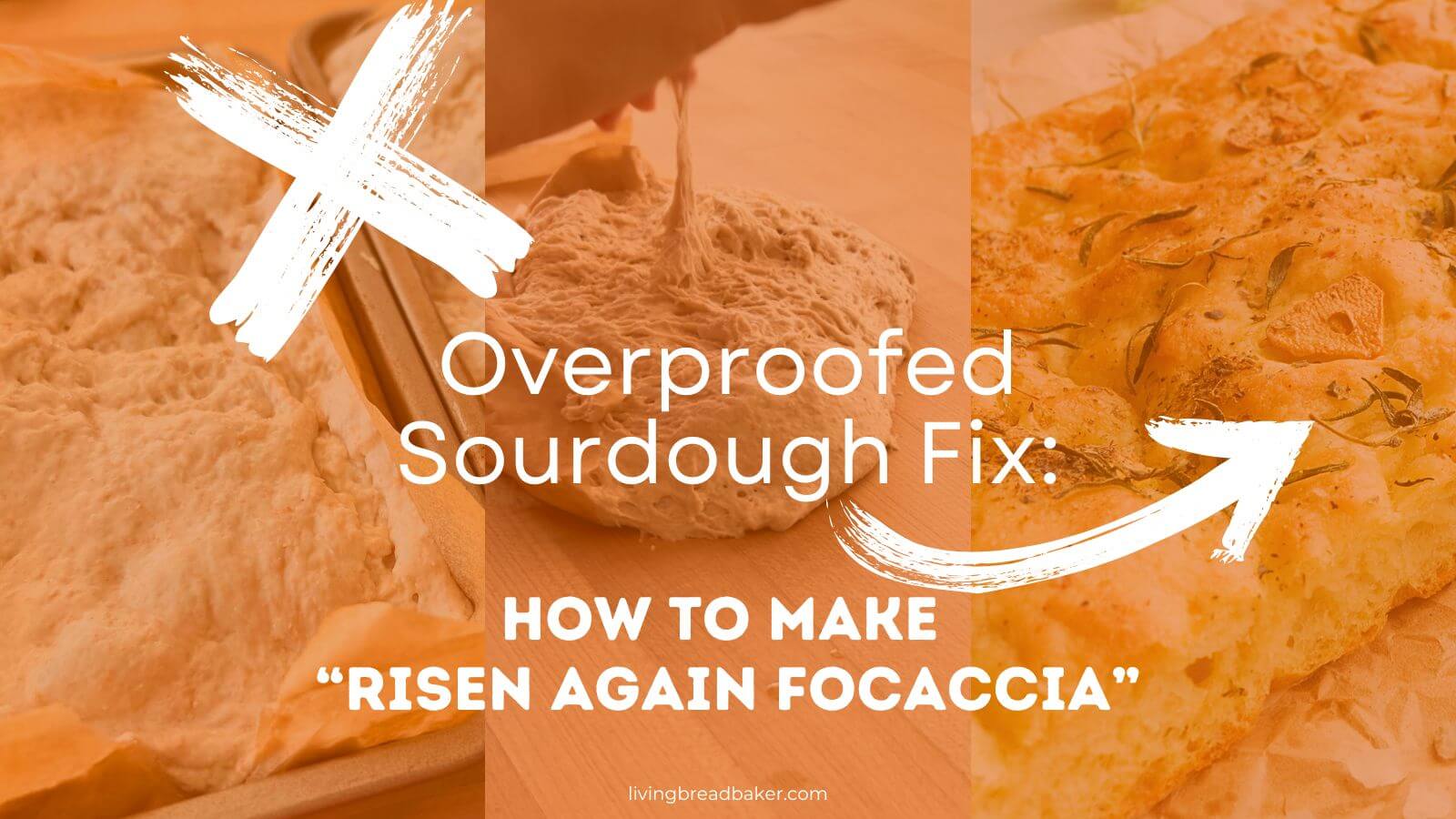
Wondering how to turn overproofed sourdough into focaccia? This simple sourdough focaccia recipe is a delicious way to repurpose your dough!
Have you ever left your sourdough dough out just a bit too long, only to find it overproofed, sticky, and deflated?
Don’t worry—it happens to the best of us! The great thing about sourdough is its versatility. Overproofed dough might not work for a perfectly shaped loaf, but it can be transformed into delicious sourdough focaccia bread with minimal effort. Here’s a step-by-step guide to salvaging your sourdough bread.
How to know if your dough is overproofed
Here are some signs that your sourdough bread dough is overproofed:
- Dough is collapsing
- Dough has a sagging, pitted appearance
- Dough is extremely sticky
At this point, the dough will be nearly impossible to shape. The gluten has become too broken down to maintain structure without a baking container or will bake flat with minimal rise.
See these posts to learn more:
- What does overproofed sourdough bread (or dough) look like?
- Sourdough Bread: 10 Signs of a Good Bake (How-to Guide)

How Overproofed Sourdough is Different than Bread Dough with Conventional Yeast
As bread dough rises, the gluten proteins in the flour develop connections to create a smooth, strong, stretchy dough and the yeast (whether commercial yeast or wild yeast) creates carbon dioxide gas which rise within the strengthening dough.
When dough made with commercial yeast overproofs, it can often be punched down and reshaped into a loaf of bread.
However, when sourdough bread dough becomes overproofed, it will not behave the same as bread dough made with commercial yeast.
Sourdough has a third factor impacting fermentation: lactic acid bacteria. The lactic acids break down the gluten proteins which creates great flavor and digestibility, but if left too long the acids weaken the dough.
Can You Reshape Overproofed Sourdough Bread Dough
While you can reshape overproofed bread dough made with commercial yeast, overproofed sourdough bread dough is not the same.
The stickiness of the overproofed sourdough and the weaker gluten structure makes it a poor candidate for reshaping.
In my experimenting, I found it much easier to turn my overproofed sourdough into focaccia!
Why Overproofed Dough Works for Focaccia
Focaccia thrives on soft, pliable, high-hydration dough—exactly what overproofed dough becomes during its extended bulk fermentation.
Instead of struggling to reshape a sticky dough, you can embrace its texture to make a beautifully airy focaccia with a crisp, golden brown crust.
How to Make Sourdough Focaccia from Overproofed Dough
There are two ways to make focaccia with your overproofed dough:
- Pan Focaccia: Using a cast iron skillet, brownie, or small rimmed baking sheet
- Freeform Focaccia: Laying it flat on a cookie sheet and shaping it into a circle or oval shape
Instead of tossing your dough or starting over, made something delicious with your focaccia!
Ingredients You’ll Need
- Overproofed sourdough dough
- 2-4 tablespoons of olive oil
- Coarse sea salt or kosher salt for topping
- Optional: Fresh rosemary, cherry tomatoes, red onions, slices of fresh fruit, berries or other toppings
Step 1: Prepare the Pan
- Decide whether you’re making a pan focaccia or freeform focaccia. For a pan focaccia, get a medium size skillet (6-8 inches wide), square cake pan, or rimmed quarter sheet. For a freeform focaccia, get a large baking sheet or sheet pan (using parchment paper will help make the clean up easier)
- Drizzle 1-2 tablespoons of olive oil in the baking pan or over the baking sheet to prevent sticking and add flavor. Rub the oil over the surface (and up the sides of the pan, if applicable) so its completely covered with oil.

Step 2: Shape the Dough
- While your hands are still oily or with slightly wet hands or a dough scraper, gently transfer the dough into the oiled pan or baking sheet.
- Add a drizzle of about 1 tablespoon of olive oil and use fingertips to gently spread your dough into a circular shape or to fill the bottom of the pan (avoid tearing the dough).

Step 3: Dimple and Rest Again
- With oiled fingertips, press dimples across the top of the dough. This not only creates the signature focaccia look but also traps toppings and helps release air pockets.
- Cover the pan with plastic wrap or a damp towel and let the dough rest in a warm spot for 30-60 minutes.
Step 4: Add Toppings
- After the dough rests, sprinkle some coarse sea salt or kosher salt across the top of the dough.
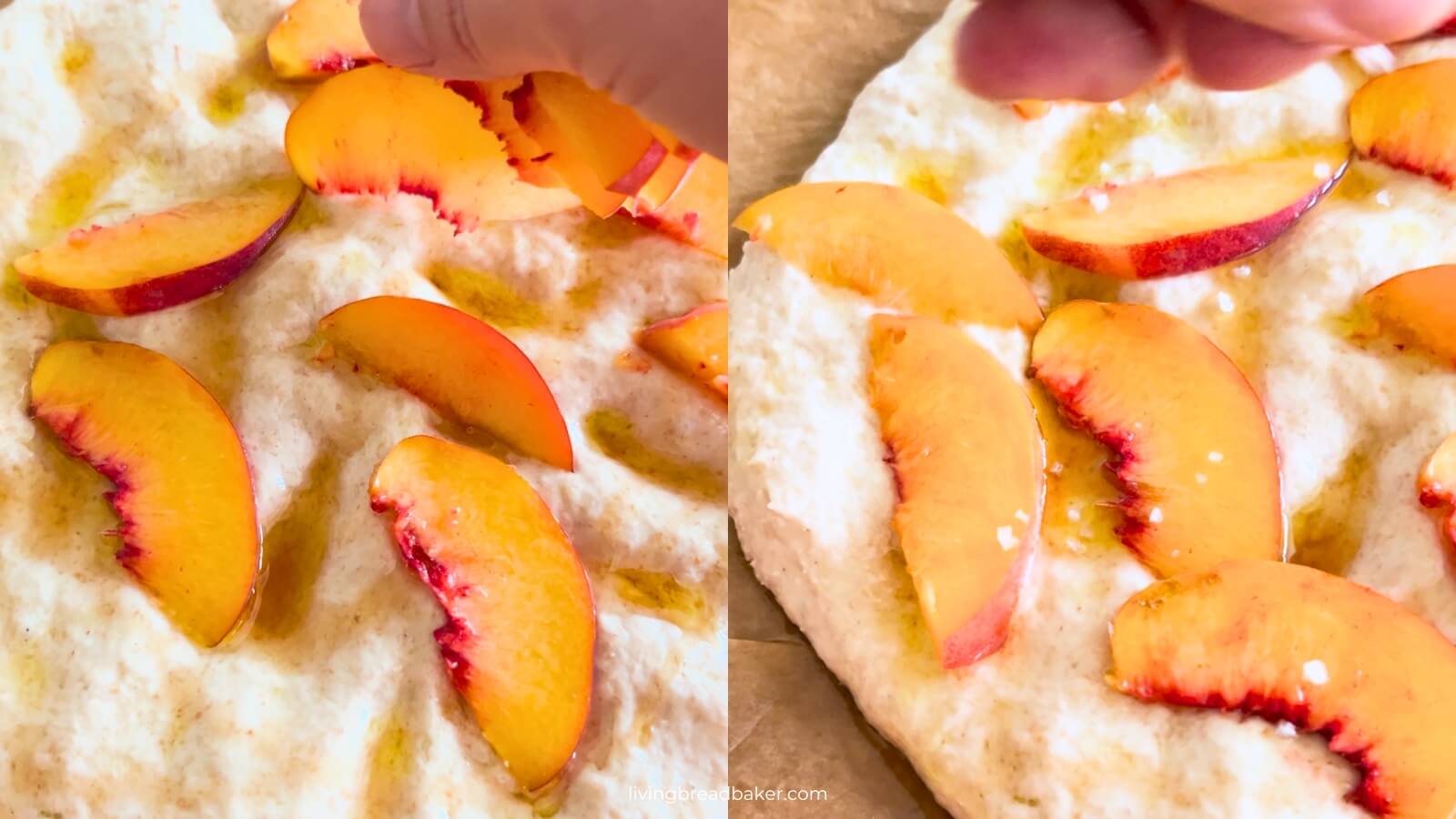
- Drizzle more olive oil and add your favorite toppings: fresh rosemary, sliced cherry tomatoes, red onions, olives, nuts, or some fresh fruit to create a unique flavor.

Step 5: Bake to Perfection
- Preheat your oven to 450°F (232°C).
- Bake the focaccia for 15-25 minutes (bake time depends on how thick the focaccia dough is), or until the top of the bread is golden brown.
Step 6: Cool and Enjoy!
- Transfer to a wire rack to cool for 10-20 minutes before cutting and serving.
- Serve with olive oil and balsamic for dipping.

Tips for Success
- Wet Hands: If the dough is difficult to work with (and overproofed sourdough is definitely sticky), make sure you have oiled or damp hands for easier dough handling.
- Customize Your Flavors: Experiment with different toppings like caramelized onions, herbs, fruit, honey, maple syrup, or even a touch of brown sugar for different flavor profiles.
- Store Smart: Leftover focaccia can be stored in an airtight container for a couple of days. Reheat in the oven to revive its crispy texture.
- Thin Dough for Crisper Focaccia, Thick Dough for Softer Focaccia: Dough that’s spread thin will become more crisp during the bake. To create a softer focaccia, choose a smaller baking container (5-6 inches wide) or a narrow loaf pan.
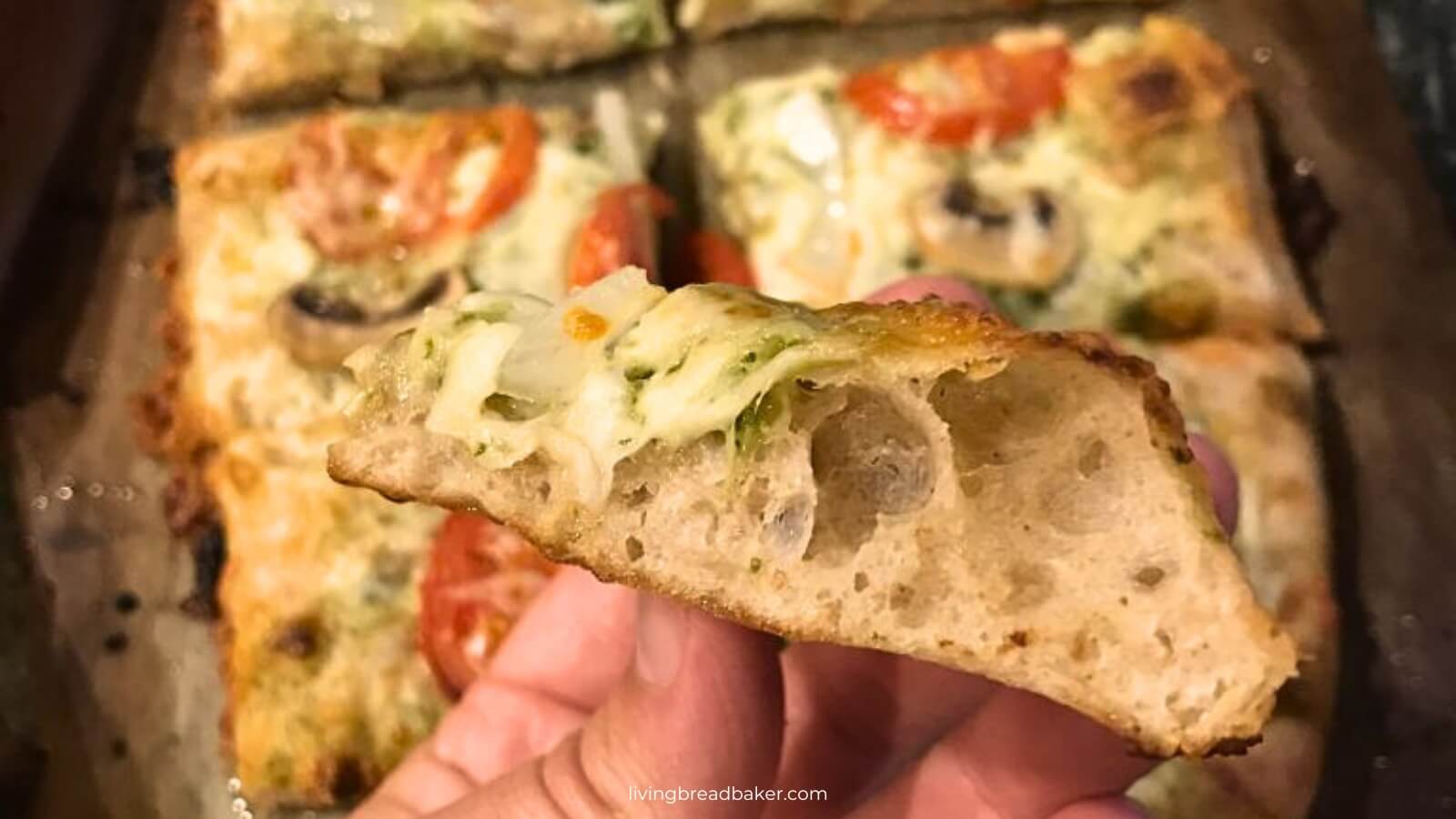
- Make it into Pizza: My first sourdough pizzas were all the focaccia style because it is so forgiving and delicious! Add your favorite toppings and check out this post for tips on getting the best bake for your focaccia pizza dough
How to Make Regular Sourdough Focaccia (Not Overproofed)
Sourdough focaccia is a delicious way to combine simple ingredients into a rustic and delicious bread for an appetizer, side dish, dessert, or a main dish if you make sourdough focaccia style pizza!
This overproofing easy sourdough focaccia recipe fix is delicious. However, if you’d like to learn how to make sourdough focaccia bread from start to finish, check out my post for focaccia style pizza using a basic sourdough bread recipe.

Why This Recipe Works
Overproofed dough may lack the gluten bonds needed for traditional bread shapes, but its relaxed structure makes it perfect for flatbreads like focaccia.
The fermentation process imparts a complex flavor, and by adding simple ingredients like olive oil and salt, you elevate a “mistake” into a delicious creation.
More Easy Sourdough Recipes
- Step by Step Sourdough Bread Guide (for a country loaf or round loaf)
- Easy Sourdough Cinnamon Rolls
- Jalapeño Cheddar Sourdough Bread Recipe (Cheesy Crust)
- Easy & Soft Savory Sourdough Cheese Twist Rolls
- Easy Sourdough Pizza Crust Recipe and Guide for Oven Baking
Embrace Mistakes: Risen Again Focaccia
Don’t let your overproofed sourdough discourage you!
It’s an opportunity to explore a simple sourdough bread recipe that’s versatile, forgiving, and incredibly tasty.
But most importantly, remember that you learn more from your mistakes than your successes especially in the world of sourdough baking.
I’d love to hear from you!
Do you have a favorite way to use overproofed dough? Or an epic fail? I’d love to hear in the comments or tag me on facebook or instagram @livingbreadbaker.
Sharing both our mistakes and successes might inspire a new sourdough baker or remind someone that the sourdough journey is about creating and sharing bread, not achieving perfection.
Just getting started with sourdough?
A competent guide transforms sourdough baking from overwhelming to uncomplicated and fun!
Get My Free Quick Start Sourdough Guide: Learn the key terms and concepts in sourdough baking, including the differences between active sourdough starter and sourdough discard, and how to care for your starter.
Get My Free Sourdough Starter Making Workbook: Follow the steps in my workbook to make your own sourdough starter from scratch in 7 days or less!
Start Baking Sourdough Confidently—Take the Intro to Sourdough Course for Just $27!

Time Planning Help for Sourdough Baking
The #1 need for sourdough bakers is help with time planning, so I created a resource for you.
Sourdough Time Planning Workbook: Perfect for new or experienced bakers, this workbook includes 8 templates ready to fill in and a baking journal. The templates cover 4 different ways to make classic sourdough country breads, 3 time planning worksheets for enriched sourdough bread depending on serving time target, and a blank template. The baking journal goes over baker’s percentages and how to take notes on your sourdough bakes.
Get a free sample of the workbook: Use this sourdough time planning worksheet sample to simplify your baking.
Get my free menu planning template: I use this template to plan my groceries, all our meals, and cooking and sourdough baking prep.
Living Bread Baker posts mentioned
When is sourdough bulk fermentation finished?
When is sourdough finished proofing?
Easy Sweet & Soft Sourdough Bread Master Recipe
Savory Sourdough Cheese Herb Babka Bread Recipe
Jalapeño Cheddar Sourdough Bread Recipe (Cheesy Crust)
Easy & Soft Savory Sourdough Cheese Twist Rolls
Easy Sourdough Pizza Crust Recipe and Guide for Oven Baking
No Lye, Easy Soft Sourdough Pretzels with Stiff Starter
Shop this post
Earlywood Designs French rolling pin
FREE Sourdough Quick Start Guide
Sourdough Time Planning Workbook & Baking Journal
My Intro. to Sourdough online course
This post contains affiliate links. Read my policy here.